
1. DEA Files 7-OH Scheduling Notices of Intent

The biggest kratom news this week is a federal one. On July 1, 2026, the U.S. Drug Enforcement Administration (DEA) sent two Notices of Intent (NOIs) to the Federal Register, beginning the process to temporarily place certain concentrated and synthetic 7-hydroxymitragynine (7-OH) products into Schedule I of the Controlled Substances Act. This follows a scientific and medical review in which the U.S. Department of Health and Human Services (HHS) and the Food and Drug Administration (FDA) recommended the DEA act on 7-OH above a certain concentration.
Crucially, this is not a kratom ban. The two notices target specific compounds, not whole-leaf kratom. One NOI addresses 7-OH above a specified threshold; the second covers three related substances — mitragynine pseudoindoxyl, MGM-15, and MGM-16 — which are lab-concentrated or semi-synthetic rather than naturally occurring in the raw leaf. For a plain-language breakdown of the notices, industry trackers such as kratom.news have been following the docket closely.
What the DEA action covers
2. Federal Register Publishes: The Public Comment Window
The Notices of Intent published in the Federal Register on July 6, 2026, which is the step that formally puts the proposal on the public record and opens a comment window. Alongside the DEA notices, the HHS Office of the Assistant Secretary for Health issued a Request for Information (RFI) seeking public input on a key open question: what concentration or quantity of 7-OH in a product should be treated as an imminent hazard to public safety.
In practice, that means the exact 7-OH threshold is still being defined, and the public — including consumers, researchers, and vendors — can weigh in during the comment period. Reporting indicates the comment window runs into late July 2026, after which the submitted comments are forwarded for a final decision. A temporary scheduling order, if issued, could take effect no earlier than August 2026 and would last up to two years while the DEA pursues permanent scheduling. Because these dates come from a live federal docket, we encourage readers to confirm the current comment deadline directly on the official Federal Register listing before relying on it.
For KratomWorld.com customers, the practical takeaway is simple: the rulemaking concerns concentrated and synthetic 7-OH, not the natural-leaf powder and capsules we sell.
3. Natural Leaf Explicitly Excluded — Industry Responds
A defining feature of this week’s DEA action is how narrowly it is drawn. The temporary scheduling process is structured so that botanical kratom products containing only naturally occurring, trace-level 7-OH are not captured. The rulemaking instead targets synthesized products and those with artificially elevated 7-OH concentrations.
Industry and advocacy groups responded quickly. Organizations including SABER (Scientific Advisory Board for Emerging Regulation) publicly welcomed the DEA’s move as a way to address concentrated and synthetic 7-OH products while preserving adult access to natural-leaf kratom. Advocates have long drawn a firm line between whole-leaf kratom — the milled botanical used in traditional powder and capsules — and the concentrated 7-OH products that have driven much of the recent regulatory scrutiny. This week’s notices largely codify that distinction at the federal level.
Why the natural-leaf distinction matters
Understanding vein types and sourcing helps consumers stay on the right side of a fast-moving regulatory landscape. Natural-leaf kratom — whether red, green, or white vein — is simply dried, milled Mitragyna speciosa leaf. It is not chemically concentrated or synthetically enhanced. That is exactly the category the DEA notices leave untouched, and it is the only category KratomWorld.com sells.
4. State Watch: Where Kratom Laws Stand Now
Federal action grabbed the headlines, but state law remains the rule that most directly affects everyday buyers. As of July 2026, eight U.S. states fully prohibit kratom: Alabama, Arkansas, Indiana, Louisiana, Vermont, Wisconsin, Connecticut, and Tennessee — with Tennessee’s ban having taken effect on July 1, 2026. There is no federal prohibition on natural-leaf kratom, so legality continues to be decided state by state.
Meanwhile, more than thirty states have adopted a Kratom Consumer Protection Act (KCPA) in some form. These laws typically set a minimum purchase age of 21, require labeling of mitragynine and 7-OH content, set product quality standards, and cap 7-OH concentration — the same responsible-market framework KratomWorld.com already follows. In Georgia, HB968 would reclassify mitragynine and 7-OH as Schedule I; as of this week it has not cleared either chamber. The bottom line for consumers: check your own state’s current rules before buying, because the map is still shifting.
Shop Natural-Leaf Kratom Powder & Capsules
KratomWorld.com sells only natural-leaf kratom powder and capsules — GMP-packed, and 21+ only. We do not sell concentrated 7-OH, synthetic derivatives, or the enhanced extracts affected by this week’s DEA notices. Here are four customer favorites:
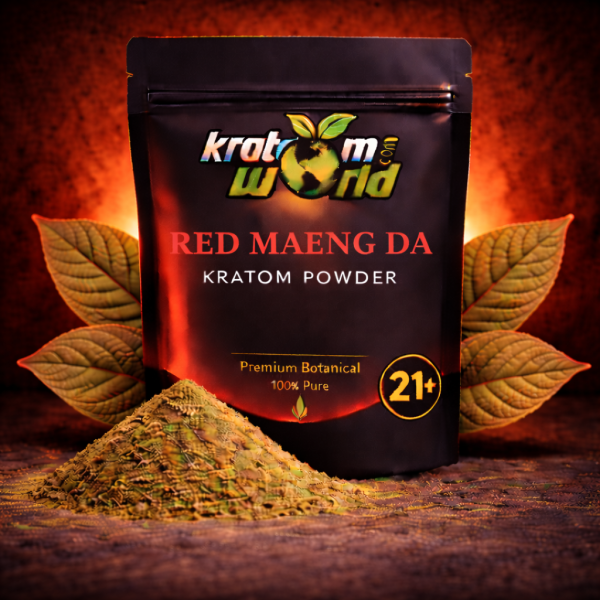
Red Maeng Da Kratom
From $14.95
Our best-selling natural-leaf Red Maeng Da powder — GMP-packed, and available in powder or capsules.

Green Maeng Da Kratom
From $14.99
Classic Green Maeng Da natural leaf, finely milled. Choose powder or convenient capsules.

Red Bali Kratom
From $14.95
Smooth, mellow Red Bali natural-leaf powder — a customer favorite, lab-verified for purity and available in capsules.

5 Kilo Bulk Kratom Powder
From $249.95
Stock up and save: 5 kilos of natural-leaf kratom powder, mix and match any strains. Best per-gram value we offer.
Frequently Asked Questions
Did the DEA ban kratom in July 2026?
No. The DEA filed Notices of Intent to temporarily place concentrated and synthetic 7-hydroxymitragynine (7-OH) products into Schedule I. The action is written so that natural kratom leaf containing only naturally occurring, trace levels of 7-OH is not captured. Natural-leaf kratom powder and capsules remain federally legal where state law permits.
What exactly is being scheduled?
Two Notices of Intent were sent to the Federal Register. One covers 7-OH above a specified concentration threshold; the other covers three related synthetic substances — mitragynine pseudoindoxyl, MGM-15, and MGM-16. These are lab-concentrated or semi-synthetic compounds, not whole-leaf kratom.
When does the scheduling take effect, and can I comment?
The Notices published in the Federal Register on July 6, 2026, opening a public comment window. HHS is also seeking input on what 7-OH concentration should count as an imminent hazard. Reporting indicates the comment period runs into late July 2026, with any temporary order taking effect no earlier than August 2026. Always verify current dates on the official Federal Register docket.
Is my natural-leaf kratom powder still legal?
Federally, yes — the scheduling action targets concentrated and synthetic 7-OH, not natural leaf. However, state law is separate: eight states fully prohibit kratom as of July 2026. Always check your own state and local rules before you buy, sell, or possess kratom.
Does KratomWorld.com sell 7-OH products?
No. KratomWorld.com sells only natural-leaf kratom powder and capsules, packaged under good manufacturing practices. We do not sell concentrated 7-OH, synthetic derivatives, or enhanced extracts affected by the DEA action.