
WEEKLY EXECUTIVE SUMMARY · AUGUST 12, 2026
Your plain-English roundup of the week’s biggest kratom regulation and policy headlines — written for adults 21+ who buy natural-leaf kratom powder and capsules.
This week’s kratom news is defined less by what happened than by what didn’t. The federal window for the DEA to publish a temporary Schedule I order covering concentrated 7-hydroxymitragynine (7-OH) opened on August 5, 2026 — and as of today, August 12, no order has appeared in the Federal Register. Meanwhile, Utah regulators traced a death and a cluster of overdoses to tablets that weren’t labeled as kratom at all, North Carolina’s omnibus hemp-and-kratom bill stalled until after the November election, and a national reporting series put a spotlight on the single problem underlying all of it: the word “kratom” is being used to describe wildly different products.
Below is the kratom news that actually changed between August 5 and August 12, 2026, what remains unresolved, and what each item does — and does not — mean for the natural-leaf powder and capsule market. For a deeper archive of ongoing coverage, you can also follow the latest kratom news throughout the week.
In This Executive Summary
1. The DEA 7-OH Scheduling Window Is Open — And Still Quiet
2. Utah Warns on “Cat’s Claw” Tablets Hiding Kratom-Derived Compounds
3. North Carolina HB 328 Stalls Until After the November Election
4. Researchers Push to Stop Calling Everything “Kratom”
5. What This Week’s Kratom News Means for Natural-Leaf Buyers
1. The DEA 7-OH Scheduling Window Is Open — And Still Quiet

The single most-watched item in kratom news right now is a document that has not been published. On July 1, 2026, the DEA announced two Notices of Intent to temporarily place 7-hydroxymitragynine above a specified threshold — plus three related compounds — into Schedule I. Both notices published in the Federal Register on July 6, 2026.
Under 21 U.S.C. § 811(h), the agency must wait at least 30 days after a Notice of Intent before it can issue the order itself. Counting from July 6, that put the earliest possible publication date at August 5, 2026. That date has now come and gone. A temporary order takes effect on the day it publishes, so the practical situation as of August 12 is straightforward: the DEA may act on any given business day, with essentially no advance warning, and it is not obligated to act on any particular timetable at all.
The threshold language is the part that matters
The notices are written around concentration, not around the plant. The proposed line is 0.05% 7-OH by dry weight. For material produced synthetically, or derived from the plant and further processed into extracts, concentrates, edibles, or pressed pills, the threshold is either 0.05% or more than 1 milligram of 7-OH per article. The companion notice covers mitragynine pseudoindoxyl (MP), dihydro-7-hydroxymitragynine (MGM-15), and 9-fluoro-dihydro-7-hydroxymitragynine (MGM-16).
Unprocessed kratom leaf, standard leaf powders, and mitragynine itself are not named in either notice. Naturally occurring 7-OH in dried leaf sits far below the proposed threshold — which is precisely why the threshold was written the way it was. If you want the longer background on how federal and state rules interact, our guide to whether kratom is legal in 2026 walks through the framework.
2. Utah Warns on “Cat’s Claw” Tablets Hiding Kratom-Derived Compounds
The most consequential state-level story in this week’s kratom news isn’t a bill — it’s an enforcement failure. The Utah Department of Agriculture and Food (UDAF) and the Utah Poison Control Center issued a joint public warning about Buzzers-brand “Cat’s Claw” tablets after linking the product to a death and a cluster of severe health incidents.
Cat’s claw is a woody vine sold as an ordinary botanical supplement. Nobody expects it to behave like an opioid. But when UDAF officers tested the Buzzers products pulled from overdose cases, the tablets came back containing mitragynine pseudoindoxyl and MGM-15 — two of the same lab-derived compounds named in the DEA’s companion notice, and compounds that researchers describe as more potent than morphine. The agencies told the public not to buy or consume the tablets and told retailers to pull them immediately.
Amberly Johnson, director of the Utah Poison Control Center, told Utah News Dispatch that the center fielded roughly 40 calls in 2026 related to kratom or kratom-derivative products, and that a growing share of recent cases traced back to these cat’s claw tablets specifically.
The American Kratom Association responded by objecting to the framing, arguing that a mislabeled tablet sold as a different botanical entirely is a criminal labeling and enforcement problem rather than a kratom problem, and calling for accurate public warnings and properly funded enforcement instead of what it characterized as political scapegoating. Whichever framing you find more persuasive, the practical lesson for consumers is the same one that has driven this entire regulatory cycle: the label on the front of the package is not the same thing as a certificate of analysis. That is a core reason we cover GMP certification and third-party lab testing as buying criteria rather than marketing garnish.
3. North Carolina HB 328 Stalls Until After the November Election
In state kratom news, North Carolina’s House Bill 328 — the omnibus measure that bundles intoxicating hemp restrictions together with kratom and xylazine provisions — did not move this week. After the Senate passed it in July, hundreds of hemp-industry employees and owners packed the legislative building on August 4, and the House simply declined to take it up.
House Speaker Destin Hall told reporters the bill will not get a floor vote until after the November election, and that he plans to assemble a working group of members to study the issue. Members, he said, “want to make sure they’re solving the problem and not making the problem worse, or doing something with unintended consequences.” Governor Josh Stein separately voiced reservations about the bill the same week.
What HB 328 would do on the kratom side
Most national coverage of HB 328 has focused on the 0.4-milligram THC cap that hemp businesses say would effectively end their category. The kratom provisions have drawn far less attention, and they are notably more moderate: the bill would set a 21+ age minimum for natural kratom consumables and would outlaw synthetic kratom along with xylazine. That structure — age-gate the leaf, prohibit the lab-modified derivatives — is the same basic architecture the Kratom Consumer Protection Act model has used in the roughly 18 states that have adopted some version of it.
The delay means North Carolina remains, for now, one of the states with no kratom-specific age restriction on the books. It also means the kratom language is now hostage to an unrelated and far more contentious hemp fight, which is worth watching: bundled bills tend to get rewritten in conference, and the version that reappears in November may not look like the version that stalled in August.
4. Researchers Push to Stop Calling Everything “Kratom”
In research-focused kratom news, a national four-part reporting series that wrapped on August 3–4 landed on a conclusion the natural-leaf side of this market has been making for two years: lumping leaf powder and lab-concentrated 7-OH under one word is generating bad data, bad coverage, and bad policy.
Dr. Shravani Durbhakula of Vanderbilt University Medical Center put it directly in Spectrum News: “We can’t just talk about kratom anymore. We need to be talking about mitragynine versus 7-OH versus any other alkaloid that might be compounded.” University of Florida medicinal chemistry professor Christopher McCurdy — one of the most-cited researchers in the field — described the blanket use of the term as a “trash can designation” that has created confusion across the medical, consumer, toxicological, and policy-making worlds simultaneously.
The reporting also noted that poison-control call volumes tied to these products were relatively stable for seven years before roughly doubling in 2025 — the same period in which concentrated 7-OH tablets, shots, and gummies proliferated in gas stations and smoke shops. Several experts quoted in the series were skeptical that federal scheduling alone will resolve the issue, predicting manufacturers will simply reformulate around whatever line is drawn. MGM-15, already covered by the DEA’s companion notice, is cited as an existing example of exactly that pattern.
5. What This Week’s Kratom News Means for Natural-Leaf Buyers
Four kratom news stories, one throughline: every active federal and state action this week targets concentration and misrepresentation, not the leaf. Here is the week at a glance.
If you buy natural-leaf powder or capsules, the practical kratom news takeaway has not changed this month: confirm your state and municipality allow sales, confirm you are 21 or older, buy from a vendor that publishes current third-party lab results, and avoid anything marketed on concentration or potency claims. Our vein color guide and vendor evaluation guide cover how to read a COA and what separates a serious supplier from a repackager.
Natural-leaf powder from KratomWorld
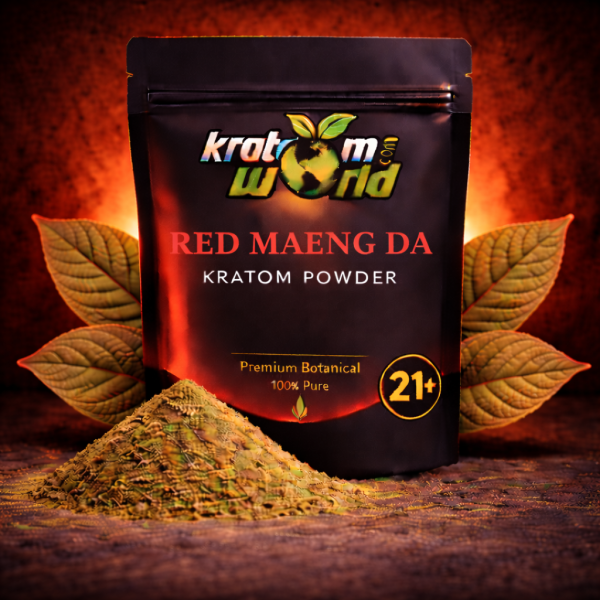
Red Maeng Da Kratom Powder
From $14.95
Single-strain, natural-leaf red vein powder. Lab-tested, never concentrated or enhanced. Available in multiple sizes up to full kilos.

Green Maeng Da Kratom Powder
From $14.99
Green vein single-strain leaf powder, finely milled and third-party tested. One of the most requested strains in our catalog.

Red Bali Kratom Powder
From $14.95
Classic red vein Bali leaf, sourced from mature trees and milled to a consistent powder. Natural leaf only — no extracts, no additives.

5 Kilo Bulk Kratom Powder
From $249.95
Choose any five natural-leaf strains at bulk pricing. The lowest per-kilo cost in our catalog for adults 21+ stocking up.
6. Kratom News FAQ: August 2026
Has the DEA banned 7-OH as of August 12, 2026?
No. As of August 12, 2026, the DEA has published Notices of Intent but has not published the temporary scheduling order itself. The earliest possible publication date was August 5, 2026, and the order would take effect on the day it publishes. Until then, 7-OH remains federally unscheduled, though a number of states have already restricted it independently.
Would the DEA order cover natural kratom leaf powder?
Based on the published notices, no. The notices are written around a concentration threshold of 0.05% 7-OH by dry weight, with an additional 1 mg per article limit for processed forms. Unprocessed leaf, standard leaf powders, and mitragynine itself are not named. Consumers should still confirm their own state and local rules, which vary considerably.
What happened with the Utah cat’s claw tablets?
Utah’s Department of Agriculture and Food and Poison Control Center warned the public about Buzzers-brand Cat’s Claw tablets after state testing found mitragynine pseudoindoxyl and MGM-15 in products connected to a death and multiple severe incidents. The tablets were not labeled as containing kratom-derived compounds at all, which is why officials treated it as a mislabeled-product enforcement matter.
What does North Carolina HB 328 do to kratom, and when will it move?
HB 328 would set a 21-and-over age minimum for natural kratom consumables and prohibit synthetic kratom and xylazine, alongside far broader restrictions on intoxicating hemp. The Senate passed it in July, but House Speaker Destin Hall confirmed on August 4, 2026 that the House will not vote until after the November election, and that a member working group will study the bill first.
Why do researchers want to stop using “kratom” as a blanket term?
Because leaf powder and lab-concentrated 7-OH products behave very differently, but get recorded under the same name in poison-control data, media coverage, and legislation. Researchers including Christopher McCurdy of the University of Florida and Shravani Durbhakula of Vanderbilt argue that separating mitragynine, 7-OH, and other compounds by name would produce clearer data and better-targeted policy.