
Welcome to this week’s KratomWorld.com Executive Summary — your FDA-friendly roundup of the top kratom news for the week of August 5, 2026. The headline is a significant one: today marks the earliest date the U.S. Drug Enforcement Administration (DEA) can issue its temporary Schedule I order targeting concentrated and synthetic 7-hydroxymitragynine (7-OH) products. Below we break down what is (and is not) covered, why natural kratom leaf remains legal, how the market is reacting, and the latest state-level movement. For daily updates between our weekly summaries, you can also follow the latest kratom news.
1. DEA’s 7-OH Schedule I Window Opens August 5
2. Natural Leaf Kratom Stays Legal: The 0.05% Threshold
3. Market Shakeout: 7-OH Clearance Sell-Off
4. Kratom News State Watch: North Carolina HB 328 & the KCPA Map
5. Shop Natural-Leaf Kratom Powder
Kratom News FAQ: Your Questions Answered
1. DEA’s 7-OH Schedule I Window Opens August 5
The biggest kratom news this week is a date on the calendar: August 5, 2026. That is the earliest day the DEA can publish a temporary scheduling order placing concentrated and synthetic 7-hydroxymitragynine (7-OH) into Schedule I of the Controlled Substances Act. The agency filed two Notices of Intent on July 1, both published in the Federal Register on July 6, opening a 30-day public comment window that closed July 31.
Because that window has now closed, the DEA may publish the temporary order any time on or after today. According to the notices, the order would take effect on the date it is published in the Federal Register and would remain in place for two years, with a possible one-year extension. The action covers 7-OH above a specified threshold along with three related synthetic substances the notices identify as mitragynine pseudoindoxyl, MGM-15, and MGM-16.
Crucially for consumers of traditional products, the DEA has repeatedly framed this as an action against manufactured, chemically enhanced products — not the botanical kratom leaf. That distinction is the story we unpack in the next section.
2. Natural Leaf Kratom Stays Legal: The 0.05% Threshold
The threshold at the center of the DEA action is 0.05% 7-OH by dry weight. Products at or below that level are not covered by the proposed temporary scheduling order. Because natural kratom leaf contains only trace, naturally occurring amounts of 7-OH — well under that line — ordinary leaf-based powder and capsules fall outside the scope of the order. The notices name concentrated and semi-synthetic products; they do not name ordinary kratom leaf or mitragynine.
The American Kratom Association (AKA) has publicly supported the DEA’s move, drawing a sharp line between natural leaf and engineered concentrates. In its statement, the AKA said: “Chemically manipulated 7-OH opioids are not kratom. They are dangerous products that exploited the reputation of natural kratom leaf, misled consumers, and created a public health threat that responsible regulators can no longer ignore.” The U.S. Department of Health and Human Services (HHS) and the FDA also commended the DEA action. Notably, the HHS public docket that closed July 31 asked only whether the 0.05% threshold was set appropriately — not whether 7-OH should be scheduled at all.
For a natural-leaf retailer like KratomWorld.com, which sells only botanical kratom powder and capsules, the practical takeaway is straightforward: our product category is not the target of this action. Here is a plain-language look at what the order covers and what it does not:
3. Market Shakeout: 7-OH Clearance Sell-Off
With the deadline arriving, the market is reacting in real time. Trade coverage this week describes a wave of 7-OH clearance sales sweeping online stores as retailers try to move concentrated inventory before a federal Schedule I order takes effect. Retailer-compliance guidance circulating in the industry is urging sellers of covered products to review their catalogs, and payment-processing commentary notes that Schedule I status can affect banking and card-processing relationships for those products.
By contrast, pure-leaf sellers are reported to be continuing normal operations, since their botanical powders and capsules sit below the threshold. For consumers, the practical effect is a clearer split in the marketplace: businesses built around engineered 7-OH concentrates face uncertainty, while established natural-leaf vendors offer more continuity. This is a good week to know exactly what category a product falls into before buying.
4. State Watch: North Carolina HB 328 & the KCPA Map
Beyond the federal action, states continue to move. In North Carolina, House Bill 328 — a comprehensive measure covering hemp-derived THC, kratom, and xylazine — cleared the House by a 66–35 vote and the Senate adopted the conference report 37–6, sending it to the governor. Its kratom provisions would restrict synthetic kratom and bar sales or possession by anyone under 21. As of this week the bill is awaiting the governor’s signature.
In Georgia, HB 968 — which would reclassify mitragynine and 7-OH as Schedule I and roll back parts of the state’s existing Kratom Consumer Protection Act — remains pending and has not cleared either chamber. Zooming out, the national picture is a contrast between two regulatory paths: outright bans in a handful of states versus consumer-protection frameworks in many more.
Because state rules differ and can change quickly, always confirm your own state’s current law before ordering. For ongoing coverage between our weekly summaries, see the latest kratom news.
5. Shop Natural-Leaf Kratom Powder
KratomWorld.com sells only natural-leaf kratom powder and capsules — the botanical category that sits outside the DEA’s 7-OH order. Every product is lab-tested and intended for adults 21 and older. Here are four popular single-strain and bulk options:
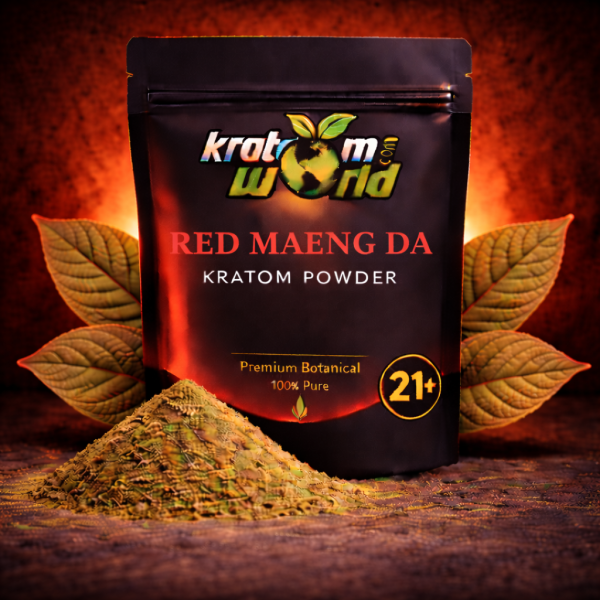
Red Maeng Da Kratom Powder
From $14.95
One of our best-selling red-vein powders. Natural leaf, lab-tested, and packed fresh. A classic starting point for red-vein fans.

Green Maeng Da Kratom Powder
From $14.99
A crowd-favorite green-vein powder milled from natural leaf. Consistent, finely ground, and third-party lab-tested for purity.

Red Bali Kratom Powder
From $14.95
A smooth, widely loved red-vein strain. Pure natural leaf with no additives — a reliable staple for any kratom shelf.

5 Kilo Bulk Kratom Powder
From $249.95
Stock up and save with our best value bulk option — choose any strains. All natural leaf, lab-tested, and shipped fresh.
6. Frequently Asked Questions
Is natural kratom leaf being banned by the DEA on August 5?
No. The DEA’s temporary scheduling action targets 7-OH above 0.05% by dry weight plus three named synthetic substances. Natural leaf powder and capsules, which contain only trace naturally occurring 7-OH below that threshold, are not named in the notices. This is news reporting, not legal advice — verify your state’s law before purchasing.
What exactly is the 0.05% threshold?
It is the line the DEA set to separate covered products from natural leaf: 0.05% 7-OH by dry weight. Products at or below that level are outside the proposed order, which is designed to capture concentrated and semi-synthetic 7-OH rather than the botanical leaf.
When does the DEA order actually take effect?
The notices state a temporary order will not be issued before August 5, 2026, and would take effect on the date it is published in the Federal Register. The control would last two years, with a possible one-year extension. As of this post, watch the Federal Register for the publication date.
Does the American Kratom Association support this action?
Yes. The AKA has publicly backed scheduling concentrated 7-OH, describing chemically manipulated 7-OH products as distinct from natural kratom leaf. HHS and the FDA also commended the DEA’s action.
Is kratom legal in my state?
It depends on where you live. As of August 2026, eight states fully ban kratom and roughly 18 have adopted Kratom Consumer Protection Act frameworks. Rhode Island recently reversed its ban, while bills like North Carolina HB 328 and Georgia HB 968 are in motion. Always confirm your current state law before ordering.