
Tennessee moves from a ban on paper to felony enforcement on the ground, Delaware puts a 21+ consumer-protection law on the books, and a national outlet reports what addiction clinics are seeing from concentrated 7-OH products. Here is the kratom news that mattered this week, and what it means if you buy natural-leaf powder or capsules.
- Kratom news this week at a glance
- Tennessee: felony warnings, 21-store seizure and mislabeled Cat’s Claw
- Mississippi: an Ole Miss investigation puts local bans in the spotlight
- Delaware HB 332: 21+ consumer protections become law
- STAT report: clinics say concentrated 7-OH products drive new cases
- Federal watch: DEA analog order in force, 7-OH threshold still pending
- What this week’s kratom news means for natural-leaf buyers
- Natural-leaf kratom powder and capsules from KratomWorld.com
- Kratom news FAQ
Kratom news this week at a glance

The theme this week is enforcement. Two months into Tennessee’s statewide ban, sheriffs are sending felony warning letters, deputies are clearing shelves county by county, and the state crime lab is flagging products that hide kratom-derived compounds under other botanical names. In Mississippi, where kratom is legal statewide but banned in a growing list of cities, a campus investigation has renewed attention on those local rules.
On the regulatory side, Delaware chose the consumer-protection path instead of a ban, adding a 21+ age floor and a 7-OH concentration limit. And a major health-news outlet published the first detailed look at what addiction clinics are reporting, with the clinicians themselves pointing to concentrated 7-OH products rather than plain leaf.
Tennessee: felony warnings, a 21-store seizure and mislabeled Cat’s Claw
Tennessee’s kratom ban, HB 1649 or Matthew Davenport’s Law, took effect on July 1. The first two months were mostly quiet. This month the enforcement side arrived all at once.
Lincoln County clears 21 stores
On September 11 the Lincoln County Sheriff’s Office announced that narcotics officers had seized kratom from 21 businesses across the county, removing what it described as tens of thousands of dollars in merchandise, according to WAFF. Officers said some of the products were mislabeled. Tablets sold as Cat’s Claw, listing Uncaria tomentosa extract on the label, tested positive for kratom at the Tennessee Bureau of Investigation lab. The sheriff’s office said it is working with the district attorney to decide whether charges will be filed.
Coffee County: a felony letter to every convenience store
A week later, Coffee County Sheriff Chad Partin sent retailers a letter telling them to remove kratom and any product containing kratom-derived compounds, including mitragynine and 7-hydroxymitragynine, or face charges. WSMV reported that the letter spells out the stakes: selling kratom in Tennessee is a Class C felony carrying three to six years, and selling to a juvenile is a Class B felony carrying eight to twelve. The sheriff added that store owners cannot rely on packaging alone to know what they are selling, and that deputies may purchase products for testing.
TBI: the Cat’s Claw problem
Behind both actions is a September 14 warning from the Tennessee Bureau of Investigation that some products marketed as Cat’s Claw contained MGM-15, a kratom-related synthetic compound that is now on the federal Schedule I list as well. Cat’s Claw itself is legal in Tennessee, which is exactly why the mislabeling is a problem for retailers who thought they were carrying a compliant herbal product.
West Tennessee raids continue
Separately, WBBJ reported on September 21 that a Brownsville smoke shop raid netted roughly 50 pounds of kratom along with marijuana, and on September 22 that West Tennessee drug agents pulled vapes, gummies and pre-rolls from additional stores. The pattern is clear: Tennessee sheriffs are now treating kratom the way they treat any other Schedule-type contraband, and retailers who kept product on the shelf after July 1 are the ones getting visited.
For KratomWorld.com customers, nothing changes. We have not shipped to Tennessee since the ban took effect and we do not plan to. If you have friends or family in Tennessee, the practical takeaway is that possession is also prohibited under the state law, not just sales.
Mississippi: an Ole Miss investigation puts local bans in the spotlight
On September 22, WSMV reported that two University of Mississippi students were found dead following a weekend of celebrations after a football win. Multiple law enforcement agencies are investigating. Police said there is no evidence the two deaths are connected, and no cause of death had been released as of this writing. Investigators did say that packaged kratom from a retail store was found during both investigations.
We are including this story because it is already driving a wave of regional coverage, including a September 23 explainer from WSMV titled around the phrase gas station heroin, and because it highlights a legal wrinkle in Mississippi. Kratom is legal statewide there, but Oxford, home of Ole Miss, is one of dozens of Mississippi cities and counties with their own local bans. Tupelo began enforcing its ordinance earlier this month, as we covered last week.
Until investigators release findings, there is nothing responsible to say about what role, if any, any product played. We will update this section in a future summary if official results are published. Our condolences go to the families and the Ole Miss community.
Delaware HB 332: 21+ consumer protections become law
Delaware went the other direction. On September 8, Governor Matt Meyer signed HB 332, an act amending Title 16 of the Delaware Code relating to kratom, sponsored by Rep. Ross Levin and Sen. Marie Pinkney. Advocacy groups counted it as the 22nd state to adopt a Kratom Consumer Protection Act style framework.
According to Delaware Public Media, the law does four things. It sets a 21+ age floor for purchase. It prohibits adulterated and mislabeled products. It caps 7-OH concentration to target synthetic and enhanced products rather than plain leaf. And it directs the Division of Alcohol and Tobacco Enforcement and the Department of Health and Social Services to evaluate the state’s ability to test kratom and to consider licensing requirements for shops, with a report due to the governor and legislature by January.
Senator Pinkney told the outlet that she joined the bill after hearing from a constituent worried Delaware would become the next ban state, and that the legislation was written with people in mind who use kratom in its pure form. That is about as clear a statement of the leaf-versus-derivative distinction as we have seen from a state legislator this year.
For buyers in Delaware: natural-leaf powder and capsules remain legal for adults 21 and older. Expect retailers to start carding at the register, and expect the January report to shape whether the state adds testing or licensing rules in 2027.
STAT report: clinics say concentrated 7-OH products drive new cases
On September 21, STAT News published a detailed report on what addiction treatment centers are seeing. The telehealth clinic Boulder Care told STAT that patients reporting kratom-product use went from 3 percent of new patients in September 2025 to 8 percent in July 2026 and 14 percent in August. Recovery Centers of America described a similar rise at two Massachusetts clinics.
Two details from the STAT report matter for anyone following this issue. First, the clinicians themselves drew the line at product type: STAT wrote that most of the Boulder Care patients reported using newer, more potent products with highly concentrated 7-OH, a compound found in the leaf only in trace amounts. Second, STAT quoted Yale epidemiology researcher Katherine Hill on the limits of the data, noting that treatment-center reports may reflect sampling bias, since people who discontinue these products without help do not show up at a clinic.
The report also cited federal survey data showing lifetime kratom use rose from roughly 4 million to 5 million people between 2019 and 2023, and the CDC’s poison-center analysis showing reports climbing from 258 in 2015 to 3,434 in 2025. A HealthDay story carried by U.S. News on September 22 summarized the same poison-center trend.
We report this because it is the news, not because we are qualified to interpret it. KratomWorld.com does not sell 7-OH products, extracts marketed as kratom, or synthetic analogs, and we make no claims about what natural-leaf kratom does or does not do. What the STAT piece does show is that the people treating patients are naming the same product category that the FDA, the DEA and 22 state consumer-protection laws have singled out: concentrated 7-OH, not plain leaf.
Federal watch: DEA analog order in force, 7-OH threshold still pending
There was no new federal action this week, but the status is worth restating because the Tennessee Cat’s Claw story depends on it. The DEA’s temporary scheduling order placing mitragynine pseudoindoxyl, MGM-15 and MGM-16 in Schedule I took effect on August 26, 2026 and runs for two years. That is the order that makes MGM-15 federally controlled, which is why a mislabeled Cat’s Claw tablet is now a federal issue as well as a Tennessee one.
The second action, placing 7-hydroxymitragynine above a specified threshold in Schedule I, closed its comment window on September 10. As of this writing the final order has not appeared in the Federal Register. The July 6 notice was explicit that botanical kratom products containing naturally occurring 7-OH below the threshold are not covered.
One post-deadline development: Pain News Network reviewed the newly posted public comments on the 7-OH docket and reported that many consumers supported age limits, testing and licensed sales while warning that Schedule I placement could affect people who rely on those products. The DEA has not indicated when it will finalize the threshold. For a running federal and state tracker, see kratom.news.
What this week’s kratom news means for natural-leaf buyers
1. Enforcement follows the law by about 60 to 90 days
Tennessee’s ban passed in April, took effect July 1, and the first coordinated county sweeps landed in mid-September. Kansas followed a similar arc. If your state passes a ban, plan on the shelves clearing within a quarter, not a year.
2. Labels are being tested, not trusted
The Cat’s Claw cases are a warning for anyone buying from a gas station or smoke shop anywhere. A product labeled as something else entirely came back from a state crime lab as kratom-derived. Buy from a vendor who tells you exactly what is in the bag: the strain, the vein color, and nothing else.
3. The 21+ floor is now standard
Delaware, North Dakota and every KCPA state adopted this year set the age at 21. KratomWorld.com has required customers to be 21 or older since well before it was law in most states.
4. The leaf-versus-7-OH line keeps holding
Clinicians in the STAT report, the DEA’s own notices, Delaware’s new law and Tennessee’s TBI warning all point at the same product category. That does not make natural leaf immune from future legislation, but it does mean the regulatory conversation is increasingly precise about what it is targeting.
Natural-leaf kratom powder and capsules from KratomWorld.com
Everything below is single-strain natural leaf, milled and packed with the strain name and vein color on the label. No extracts, no enhanced products, no 7-OH. Adults 21 and older only, shipped within the USA to states where kratom is legal.
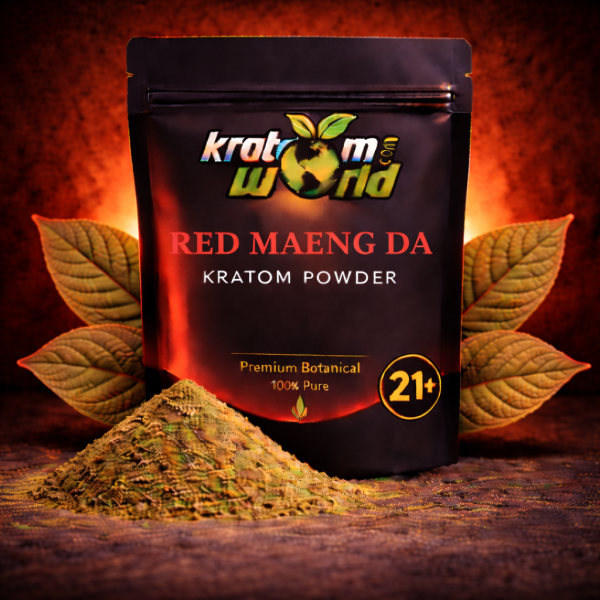
Red Maeng Da Kratom
From $14.95
Single-strain red vein natural-leaf powder and capsules. Sizes from 1 oz up to a full kilo, from the same lot every time.

Green Maeng Da Kratom
From $14.99
Green vein natural-leaf powder and capsules. Finely milled, sealed and labeled with the strain and vein color.

Red Bali Kratom
From $14.95
One of the most searched red strains. Natural-leaf powder and capsules, plain leaf only, no extracts and no 7-OH.

5 Kilo Bulk Kratom Powder
From $249.95
Choose any five strains and pay the lowest per-kilo price on the site. Natural-leaf powder only, shipped in the USA.
Kratom news FAQ
Is natural-leaf kratom included in the DEA 7-OH scheduling action?
No. The DEA notice that took effect on August 26, 2026 covers three synthetic kratom-related compounds (mitragynine pseudoindoxyl, MGM-15 and MGM-16). A separate proposal would cover 7-OH above a set threshold, and that order had not been published as of this writing. Plain kratom leaf powder and capsules that contain only naturally occurring alkaloid levels are not the target of either action.
What changed in Tennessee this week?
Tennessee’s statewide ban (Matthew Davenport’s Law) has been in effect since July 1, 2026. This week the enforcement side escalated: Lincoln County deputies seized kratom from 21 businesses, the Coffee County Sheriff sent retailers a letter warning of Class C felony charges, and the TBI warned that some products labeled as Cat’s Claw contained MGM-15. KratomWorld.com does not ship kratom to Tennessee.
What does Delaware’s HB 332 actually do?
HB 332, signed September 8, 2026, is a consumer-protection law rather than a ban. It sets a 21+ age floor, bars adulterated or mislabeled products, limits 7-OH concentration to target synthetic and enhanced products, and directs state agencies to report on testing and licensing options by January. Natural-leaf kratom remains legal for adults 21 and older in Delaware.
Does KratomWorld.com sell 7-OH products?
No. KratomWorld.com sells natural-leaf kratom powder and capsules only. We do not sell 7-OH tablets, enhanced shots, gummies, isolates or synthetic kratom analogs, and we do not make health or medical claims about our products.
Where can I read last week’s kratom news?
Our previous roundup covered Iowa’s push for a statewide ban, Coeur d’Alene’s new city ordinance and the Tupelo, Mississippi enforcement start. You can find it in the Buy Kratom category on KratomWorld.com, and longer state-by-state coverage lives on kratom.news.