
WEEKLY EXECUTIVE SUMMARY · SEPTEMBER 9, 2026
The week natural leaf won one: North Dakota scrapped its total kratom ban, the DEA’s synthetic scheduling order finally took effect, and a federal comment window closes tomorrow.
In This Executive Summary
1. Kratom News This Week at a Glance
2. North Dakota Kills the Total Ban and Regulates Natural Leaf
3. DEA Synthetic Analog Order Takes Effect — Leaf Not Targeted
4. September 10 Deadline: The 7-OH Threshold Comment Window
5. Massachusetts Retailers Sue to Block the Statewide Order
6. Montana Tables the KCPA as a Ban Proposal Advances
7. What It Means for Natural-Leaf Powder and Capsule Buyers
Kratom News This Week at a Glance

This was the most consequential two weeks of kratom news since the summer. A state that had banned kratom outright by executive order reversed course and wrote a natural-leaf regulatory framework instead. The DEA’s long-awaited emergency scheduling order finally published — and it landed on three laboratory-made compounds, not on the leaf. Meanwhile a federal comment docket closes tomorrow, a Massachusetts courtroom will decide whether a statewide Schedule I order survives, and Montana lawmakers spent a day arguing over whether regulation or prohibition comes next.
The through-line for anyone who buys natural-leaf kratom powder and capsules is the same one we have flagged every week since July: regulators keep drawing a line between the botanical leaf and concentrated or synthesized derivatives. This week, that line got sharper in three separate venues at once.
North Dakota Kills the Total Ban and Regulates Natural Leaf
North Dakota spent August as the strictest kratom state in the country. Gov. Kelly Armstrong’s executive order declaring a public health emergency prohibited the sale, use, and possession of all kratom and kratom-derived products statewide beginning at 5 p.m. on August 5, and he called a special legislative session for September 2 to write that prohibition into permanent law.
The Legislature did not give him the ban. It gave him a regulatory framework instead.
SB 2408 fell by a single vote
Senate Bill 2408, which would have permanently banned all kratom in every form, cleared the Senate 46-1 on September 3. The next day it failed on the House floor 46-47. House opponents argued the total ban had not received a proper hearing and had excluded key voices — including members of the public who testified about using natural leaf for pain.
HB 1628 became the vehicle
The Senate then amended a synthetic-derivative ban into House Bill 1628, sponsored by Rep. Pat Heinert, R-Bismarck, and passed it unanimously. The House approved the amended version 91-2 on September 4, and Armstrong signed it that afternoon — while rescinding his August executive order. “We got 90% of what we wanted,” he told reporters, adding that he may pursue a total ban again in the regular session beginning in January 2027.
What HB 1628 actually does: it permits but strictly regulates pure-leaf kratom for adults 21 and over, and classifies synthetic kratom derivatives as controlled substances on the same schedule as LSD and heroin. The law adds retailer licensing, ingredient labeling, recommended serving size and servings-per-package disclosure, mandatory lab testing of product composition, enforcement authority for the attorney general, escalating penalties for possession of synthetics (from an infraction up to a class C felony on a third offense), and $20,000 for a public health information campaign. Products cannot carry candy-like packaging.
The catch: it is still unavailable there
Attorney General Drew Wrigley’s office must now write and adopt the retailer licensing rules, a process he said follows normal state rulemaking and typically takes months. Wrigley was blunt that kratom “remains banned in all of its forms” until that administrative process finishes. Senate Majority Leader David Hogue, R-Minot, estimated roughly six months. A fiscal note projected about $7 million in revenue from roughly 700 retailers paying a $10,000 application fee, against up to $2.5 million in costs over two years.
Bottom line for buyers: North Dakota is not a shipping destination right now, and will not be until the AG’s rules are final. But the outcome matters far beyond one state — it is the first time in this cycle that a legislature explicitly rejected treating natural leaf and synthetic derivatives as the same product.
DEA Synthetic Analog Order Takes Effect — Leaf Not Targeted
We have tracked the DEA’s temporary scheduling action since the Notices of Intent went to the Federal Register in early July, and reported for three consecutive weeks that no order had actually published. That changed in late August. Mitragynine pseudoindoxyl (MGPI), MGM-15, and MGM-16 became Schedule I controlled substances effective August 26, 2026, and the temporary placement runs until August 26, 2028.
All three are laboratory compounds, not the dried leaf. The Justice Department’s announcement framed the action explicitly: it is directed at deliberately manufactured and concentrated opioid products, not traditional botanical kratom.
The trace-amount wrinkle worth understanding
The order sets no numeric threshold for MGPI, which matters because published analytical work has reported MGPI detection in a majority of tested products, including plain leaf powders — and because MGPI and 7-OH are structurally similar enough that misidentification has occurred without proper instrumentation. DEA acknowledged that scientific questions remain about whether MGPI might be reported at incidental trace levels in botanical products as a result of processing, storage, or analytical conditions, and said the Department of Justice will exercise enforcement discretion where only incidental trace amounts are confirmed in a product otherwise consistent with botanical kratom.
DEA was equally clear that this is discretion, not a carve-out: the policy “does not create a legal exemption” and does not change the Schedule I status of the compounds. In practice that puts a premium on third-party lab documentation and clean sourcing — the exact reason we cover GMP certification standards and only stock unadulterated natural leaf.
September 10 Deadline: The 7-OH Threshold Comment Window
The separate question — how much naturally occurring 7-hydroxymitragynine a kratom product may contain before it is treated as a scheduled concentrate — is still open, and the public comment window closes tomorrow.
In a notice dated August 25, the HHS Office of the Assistant Secretary for Health extended the comment period on the proposed 7-OH threshold to September 10, 2026, on docket HHS-OASH-2026-0232. Neuroscientist Dr. Michele Ross had formally requested the extension; a 60-day extension is typical for allowing scientists to prepare detailed technical comments, but OASH granted 15 days.
OASH narrowed the scope sharply. It stated it is seeking comments only on the 7-OH threshold that should be allowable in kratom products, and is not soliciting comment on any permanent scheduling decision, on the general safety or utility of kratom-derived products, or on other policy questions outside the threshold determination. Comments submitted to the docket will be forwarded by the Secretary of Health and Human Services for consideration by the Attorney General.
If you follow the federal docket closely, the ongoing coverage at kratom.news is a useful running record of filings and deadlines alongside our weekly roundups.
Massachusetts Retailers Sue to Block the Statewide Order
Massachusetts moved in the opposite direction from North Dakota. The Department of Public Health’s emergency order placing all forms of kratom in Schedule I took effect on August 28 after a 14-day notice period and can remain in force for up to a year.
Four retailers — Rihaan Corporation (doing business as Jay’s Smoke Shop in Salem), Bhakti LLC of North Billerica, V & K Smoke Shop LLC of Quincy, and Ambreen & S Inc. of Bellingham — sued in Suffolk County Superior Court to block it. Their complaint against DPH and Commissioner Robbie Goldstein argues that the commissioner lacked authority to place kratom in Schedule I, that the state failed to satisfy the requirements justifying an emergency order, and that the order sweeps in all kratom products rather than the synthetic derivatives that drive the health concerns. The plaintiffs contend the public health data describes long-standing market conditions and essentially flat mortality figures rather than a sudden emergency. The state’s order cites more than 100 kratom-associated deaths since 2020.
No ruling has issued. This is the case to watch: it is the cleanest test yet of whether a state can classify botanical leaf and chemically manipulated 7-OH products under one order. Massachusetts is a no-ship state for us in the meantime.
Montana Tables the KCPA as a Ban Proposal Advances
On September 1, Montana’s Law and Justice Interim Committee tabled a Kratom Consumer Protection Act 8-1 — but not because members wanted a lighter touch. Several said the bill was not strict enough. Sen. Vince Ricci, R-Livingston, objected specifically to its 18-and-over age limit, noting that tobacco, cannabis, and alcohol are all set at 21 in the state.
The tabled bill would have banned synthesized kratom, imposed labeling requirements, and allowed state-regulated and tested products. A separate proposal to designate kratom’s constituent compounds as controlled substances passed the Economic Affairs Interim Committee on a bipartisan vote. Rep. Steven Kelly, R-Flathead, called the current situation the “Wild West,” and there was broad agreement the state needs some form of regulation in the 2027 session. Nothing takes effect in Montana today — but the age-limit critique is a signal worth noting: the states writing new frameworks are converging on 21+, which is already our standard.
What It Means for Natural-Leaf Powder and Capsule Buyers
Four practical takeaways from this week’s kratom news:
1. The leaf-versus-derivative distinction is holding at the federal level
The one order that actually took effect covers three synthesized compounds. Federal agencies have repeatedly stated the action targets manufactured concentrates rather than traditional botanical kratom.
2. Documentation is now the differentiator
With no numeric MGPI threshold and enforcement resting on discretion, third-party testing and a documented supply chain are what separate a compliant natural-leaf vendor from a gas-station shelf. Ask for lab documentation before you buy from anyone.
3. State law is still the binding constraint
Federal scheduling of synthetics does nothing to legalize kratom where a state has banned it, and North Dakota shows a state can flip in either direction inside 30 days. Check our state-by-state legality guide before ordering, and re-check it — it changes.
4. 21+ is becoming the national floor
North Dakota’s new law sets 21. Montana legislators rejected a bill partly for setting 18. Kratom World has always sold to adults 21 and over only.
Shop Natural-Leaf Kratom Powder and Capsules
Every product below is unadulterated natural-leaf Mitragyna speciosa — no extracts, no concentrates, no synthesized derivatives. Adults 21 and over only, and not for sale where prohibited by state or local law.
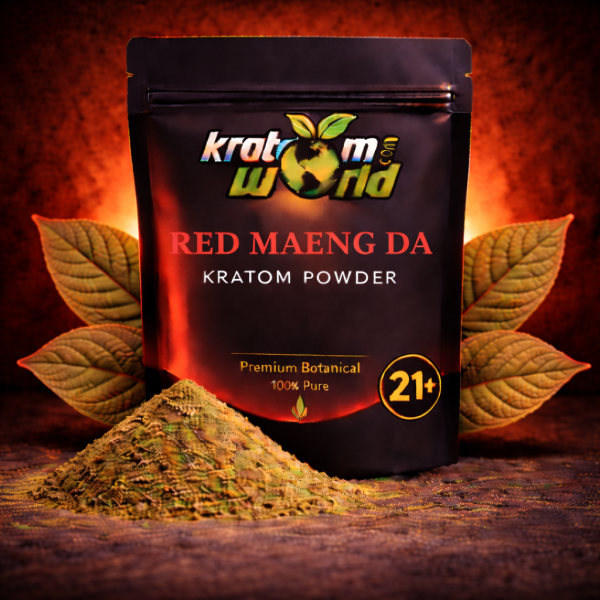
Red Maeng Da Kratom
From $14.95
Our most-requested red vein. Finely milled natural-leaf powder, available in sizes from sample packs up to full kilos, with capsules offered on the same product page.

Green Maeng Da Kratom
From $14.99
The green-vein counterpart to our best seller, sourced from the same natural-leaf supply chain. Powder and capsules, single ounces through kilos.

Red Bali Kratom
From $14.95
A classic red-vein staple and one of the most familiar natural-leaf strains on the market. See our full Red Bali guide for origin and format details.

5 Kilo Bulk Kratom Powder (Choose Any Strains)
From $249.95
Mix and match any five kilos of natural-leaf powder at our lowest per-kilo pricing. The practical option if you want to stock up while state rules keep shifting.
Kratom News FAQ
Did the DEA ban kratom in August 2026?
No. The DEA’s emergency scheduling order that took effect August 26, 2026 covers three laboratory compounds — mitragynine pseudoindoxyl (MGPI), MGM-15, and MGM-16 — as Schedule I substances for two years. The Justice Department stated the action is directed at deliberately manufactured and concentrated opioid products, not traditional botanical kratom. Natural-leaf kratom was not scheduled.
Is kratom legal in North Dakota now that HB 1628 was signed?
Not yet in practice. HB 1628 was signed September 4, 2026 and permits regulated natural-leaf kratom for adults 21 and over while banning synthetic derivatives. But Attorney General Drew Wrigley stated kratom remains banned in all forms until his office completes the licensing rulemaking, which officials estimate could take around six months.
When does the federal 7-OH comment period close?
September 10, 2026. HHS/OASH extended the comment window on docket HHS-OASH-2026-0232 in a notice dated August 25. The agency specified it is only accepting comment on the allowable 7-OH threshold in kratom products, not on permanent scheduling or broader policy questions.
What is the Massachusetts kratom lawsuit about?
Four Massachusetts retailers filed suit in Suffolk County Superior Court against the Department of Public Health and Commissioner Robbie Goldstein, seeking to block the emergency order that placed all forms of kratom in Schedule I effective August 28, 2026. They argue the commissioner lacked authority, that emergency-order requirements were not met, and that the order should not have covered botanical leaf alongside synthetic derivatives. No ruling had issued as of this writing.
Does Kratom World ship natural-leaf powder and capsules to every state?
No. We sell natural-leaf kratom powder and capsules to adults 21 and over and do not ship where state or local law prohibits it, including currently Massachusetts and North Dakota. Because state rules change frequently, verify your own jurisdiction before ordering — our state legality guide is updated as laws move.