
Kratom news for the week of September 9 to 16, 2026: Iowa’s governor pushes for a total ban, an Idaho city writes its own kratom rules, a ProPublica investigation lands, and a Mississippi city begins enforcement. Natural-leaf powder and capsules remain legal at the federal level.
- Iowa governor calls for a total kratom ban
- Coeur d’Alene, Idaho adopts a permit-and-cap kratom ordinance
- ProPublica investigation puts kratom research disclosures under a microscope
- Tupelo, Mississippi starts enforcing its city kratom ban
- Federal watch: 7-OH comment window closes, DEA order in force
- What this week’s kratom news means for natural-leaf buyers
- Natural-leaf kratom powder and capsules from KratomWorld.com
- Kratom news FAQ
Welcome to the KratomWorld.com weekly executive summary, our Wednesday roundup of the kratom news that actually moves the market. This week the headlines shifted from federal to state and city halls. Iowa’s governor went on record for a total kratom ban, Coeur d’Alene in Idaho became the latest city to write its own kratom ordinance, Tupelo in Mississippi finally began enforcing a ban it passed in February, and a ProPublica investigation into a prominent University of Florida kratom researcher was picked up by NPR affiliates nationwide. On the federal side, the HHS comment window on a 7-OH threshold closed on September 10, and the DEA’s synthetic-only scheduling order remains in force.
If you missed last week, our September 9 kratom news summary covered North Dakota’s reversal from a total ban to regulation, the DEA order taking effect, and the Massachusetts retailer lawsuit. Every story below is new since then. For daily updates between our weekly summaries, kratom.news tracks legislation and FDA activity as it happens.
Iowa governor calls for a total kratom ban

At a September 1 press conference in Des Moines, Governor Kim Reynolds joined the Iowa Department of Public Safety and the state medical director in warning Iowans about kratom and, more pointedly, about concentrated and synthetic 7-OH products. Reynolds did not stop at the synthetics. Asked directly, she said she wants a total ban covering natural leaf as well, arguing that anything short of that is too easy to work around. The story reached a national audience on September 10 when NPR’s Here and Now cited Iowa as the latest state pushing for a full ban.
The numbers state officials cited: 45 kratom-associated deaths confirmed in Iowa since 2024, 16 of them in the first seven months of 2026, and 68 kratom-related calls to Iowa Poison Control so far this year. Officials did not separate natural-leaf exposures from concentrated 7-OH tablets and shots in those figures, which is the same gap consumer advocates have flagged in other states.
What this is not, at least yet, is a ban. Here is where Iowa actually stands:
The Iowa legislature does not reconvene until January 2027, so the near-term item to watch is the Board of Pharmacy. If it issues an emergency rule, the question for natural-leaf buyers is whether it mirrors the DEA’s synthetic-only list or goes further. We will report it the week it happens. Our state-by-state kratom legality guide will be updated the same day.
Coeur d’Alene, Idaho adopts a permit-and-cap kratom ordinance
Idaho has no statewide kratom law, and a 2026 regulation bill stalled at the statehouse after hours of testimony in March. Cities are now filling the gap. On Tuesday, September 15, the Coeur d’Alene City Council voted unanimously to regulate rather than ban kratom inside city limits. Council member Dan English called it a good starting point and said time was of the essence, a nod to the synthetic 7-OH products that have shown up in North Idaho shops over the past year.
The ordinance is a local version of a Kratom Consumer Protection Act. Its main provisions:
Coeur d’Alene follows Sandpoint, which tabled a proposed ban indefinitely in May, and Kellogg, which considered a ban in April. Across the state line in Washington, Mount Vernon and Othello went the other direction and enacted local bans earlier this year. The pattern is familiar from Mississippi and Illinois: where the state does not act, cities do, and the results vary block by block. If you order online from a regulated city, the ordinance governs local retail; it does not stop an adult from receiving a legal mail-order package, but always confirm your own municipality’s rules.
ProPublica investigation puts kratom research disclosures under a microscope
This is the story most likely to shape the 2027 legislative sessions. On September 1, ProPublica published an investigation by reporter Anjeanette Damon into University of Florida pharmacy professor Christopher McCurdy, the scientist most often deployed by the American Kratom Association (AKA) to brief lawmakers. On September 10 the story went national when WBUR’s Here and Now interviewed Damon, and the segment ran on NPR member stations from Florida to North Carolina.
ProPublica’s findings, in short: McCurdy accepted travel reimbursements from the AKA (including a hotel in Vienna for a 2025 UN Commission on Narcotic Drugs briefing and an $8,700 first-class ticket for a planned Indonesia trip that was later cancelled), the AKA’s nonprofit arm donated more than $100,000 to the University of Florida foundation, and the AKA helped underwrite McCurdy’s annual kratom research symposium. None of that appears in his conflict-of-interest statements or on his published papers. McCurdy told ProPublica his views rest on two decades of research and are not dictated by the AKA, and a university spokesperson said a review found no indication of non-compliance with UF’s disclosure policy. AKA lobbyist Mac Haddow said the group has never commissioned a study from McCurdy and that travel reimbursements are not typically disclosed.
Why it matters to natural-leaf consumers: McCurdy has been the AKA’s key witness in Arkansas, Rhode Island, Georgia and before Congress, and his testimony helped Rhode Island overturn its ban in 2025. Expect opponents of kratom to cite this investigation in every 2027 hearing, and expect regulators to lean harder on their own datasets, such as poison-center reports, rather than on outside experts. It is also worth noting what the story confirms: McCurdy, the AKA and the DEA all draw the same line between botanical leaf and the synthetic derivatives the DEA scheduled in August. That distinction is the one that protects natural-leaf powder and capsules, and it is not in dispute.
Tupelo, Mississippi starts enforcing its city kratom ban
Tupelo police began enforcing the city’s kratom ban at 10 a.m. on Saturday, September 12, after giving retailers 48 hours’ notice. The city council passed the ordinance unanimously on February 3, 2026, but a local shop owner’s lawsuit kept it on hold for seven months. A court dismissed that challenge in August on procedural grounds; the owner had until September 17 to appeal. Neighboring Lee County pursued a parallel countywide restriction that faced a similar retailer challenge.
The Tupelo ordinance prohibits the use, sale, distribution and public display of kratom products within city limits, and police say products found after enforcement began will be confiscated. It sits on top of Mississippi’s statewide Kratom Consumer Protection Act (HB 1077, effective July 2025), which set a 21+ minimum age and a 1 percent 7-OH cap but expressly let municipalities enact total local bans. More than 30 Mississippi municipalities and 11 counties, most in the northeast corner of the state, have done so. Mississippi is the clearest example in the country of a state where kratom is legal and regulated at the state level yet prohibited in a large share of its towns. A similar local ban took effect this month in Naperville, Illinois.
Federal watch: 7-OH comment window closes, DEA order in force
Two federal items to log this week. First, the reopened HHS Office of the Assistant Secretary for Health comment period on the 7-OH threshold (docket HHS-OASH-2026-0232) closed on September 10. That docket asks a narrow question: at what 7-OH concentration, measured by dry weight, should a product be treated as a controlled substance? The proposed figure is 0.05 percent, which is roughly the level found in natural leaf and far below the concentrated tablets and shots that triggered the FDA’s warning letters in 2026. The original 30-day window drew more than 32,000 comments. As of September 16 no final threshold order has been published, and there is no statutory deadline for one.
Second, the DEA’s temporary Schedule I control of mitragynine pseudoindoxyl, MGM-15 and MGM-16 has now been in force for three weeks. The Department of Justice said explicitly that the order does not target traditional botanical kratom, and the DEA’s news release specified that it does not apply to botanical kratom products. Iowa’s press conference, the Coeur d’Alene ordinance and the Tupelo enforcement notice all cited the DEA order as context, which tells you how much state and local officials are now anchoring on the federal synthetic-versus-natural distinction. For a plain-language explanation of what natural-leaf buyers need to know, see our FDA kratom safety executive summary.
What this week’s kratom news means for natural-leaf buyers
Three takeaways. One: the synthetic-versus-natural line is holding at the federal level and is being written into local ordinances like Coeur d’Alene’s. Natural-leaf powder and capsules were not touched by any action this week. Two: the risk to natural leaf now comes from governors and city councils, not the DEA. Iowa is the state to watch; a Board of Pharmacy emergency rule could arrive before the legislature does. Three: the science debate itself is now a news story. The ProPublica investigation will be quoted in hearings for months, so expect the industry to respond with more transparent funding disclosures and more emphasis on GMP manufacturing and honest labeling.
None of this changes what we do at KratomWorld.com. We sell natural-leaf kratom powder and capsules only, we do not sell concentrated 7-OH, extracts marketed as 7-OH, or any of the synthetic compounds on the DEA list, and we ship only to states where kratom is legal. Read about our sourcing in our kratom GMP certification guide.
Natural-leaf kratom powder and capsules from KratomWorld.com
Every product below is natural-leaf Mitragyna speciosa powder, milled and sealed, with capsule options on the single strains. Prices shown are the base size; larger sizes and kilos are on each product page.
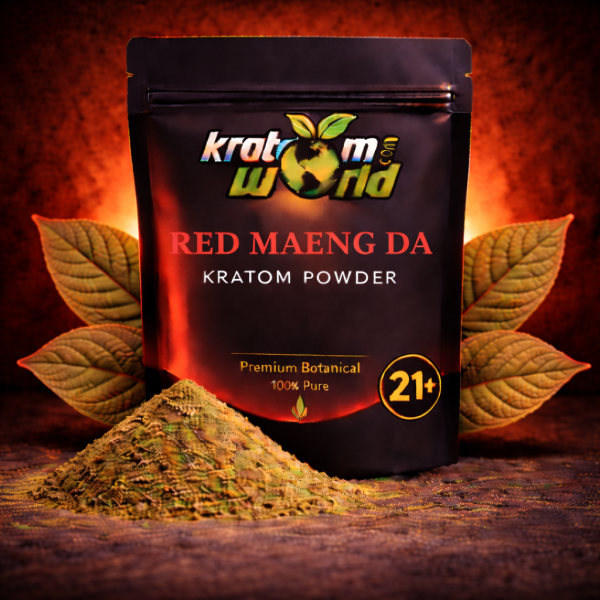
Red Maeng Da Kratom
From $14.95
Natural-leaf red vein Maeng Da kratom powder, milled fine and sealed fresh. Available from 60 g up to full kilos, powder or capsules.

Green Maeng Da Kratom
From $14.99
Green vein Maeng Da kratom powder from mature Southeast Asian leaf. One of our most reordered strains, in powder or capsules.

Red Bali Kratom
From $14.95
Classic red vein Bali kratom powder. A staple natural-leaf strain that pairs well with any kilo split.

5 Kilo Bulk Kratom Powder
From $249.95
Five kilos of natural-leaf kratom powder, choose any strains. Our best per-gram price for bulk buyers who want to lock in supply.
Kratom news FAQ
Is natural-leaf kratom affected by the DEA scheduling that took effect August 26, 2026?
No. The DEA’s temporary Schedule I order covers three synthetic compounds (mitragynine pseudoindoxyl, MGM-15 and MGM-16). Botanical kratom leaf, and the mitragynine that occurs naturally in it, were not scheduled. KratomWorld.com sells only natural-leaf powder and capsules.
Did Iowa ban kratom this week?
Not yet. Governor Kim Reynolds said on September 1 that she wants a total ban, and the Iowa Board of Pharmacy is considering emergency rules, but no ban is in effect. Natural-leaf kratom remains legal to buy and possess in Iowa as of this writing. Check current Iowa law before ordering.
What did the Coeur d’Alene, Idaho kratom ordinance actually do?
The city council voted unanimously on September 15 to require a city permit to sell kratom, set a 21+ minimum age, cap 7-OH content, restrict child-appealing packaging and prohibit the word ‘gummies’ on kratom packages. It regulates sales inside city limits; it is not a ban, and it does not change Idaho state law.
What happened with the HHS 7-OH threshold comment period?
The reopened comment window on HHS docket HHS-OASH-2026-0232 closed on September 10, 2026. The question on the table is the 7-OH threshold above which a product would be treated as a controlled substance (0.05 percent by dry weight was proposed). No final order had been published as of September 16.
Why does the ProPublica story about a kratom researcher matter to consumers?
It does not change any law, but it will shape how lawmakers weigh scientific testimony in upcoming state sessions. Expect more scrutiny of funding disclosures on both sides of the kratom debate, and expect regulators to lean harder on their own data, such as poison-center reports.