
WEEKLY EXECUTIVE SUMMARY · OCTOBER 7, 2026
The week’s most-read kratom news, condensed for natural-leaf buyers: Pennsylvania’s House passes a natural-leaf regulation bill with a 7-OH cap, charges are filed in the Ole Miss investigation, Stateline maps how 50 states now treat leaf versus synthetics, and the Illinois suburban ban wave reaches Bartlett.

This week’s kratom news finally produced a legislative answer to the question every story in this series has been circling: how do you keep synthetic 7-OH tablets off the shelf without banning the leaf? On Monday, October 5, the Pennsylvania House of Representatives passed House Bill 2657 unanimously. The bill allows registered retailers to sell natural-leaf kratom powder and capsules to adults 21 and older, bans any product above 0.5 percent 7-hydroxymitragynine, requires warning labels and child-resistant packaging, and adds a 12 percent tax earmarked for enforcement. It now goes to a Senate with only seven session days left.
The other big stories point the same direction. In Mississippi, the Ole Miss investigation produced criminal charges against a smoke shop manager and his son, and autopsy results reported by Gray Television identified MGM-15 and mitragynine pseudoindoxyl, both Schedule I synthetics, in both students. Stateline published a 50-state analysis showing how quickly leaf and 7-OH law have diverged. And in Illinois, Bartlett became the ninth Chicago suburb to move toward a local sales ban. Everything a natural-leaf buyer needs to know is below, with sources linked. Our most recent published edition is here: Kratom News September 23, 2026: Tennessee Felony Crackdown.
In this summary
1. Pennsylvania House passes HB 2657: natural leaf regulated, synthetics banned
2. Ole Miss investigation: charges filed, synthetic MGM-15 confirmed in autopsies
3. Stateline’s 50-state review: how kratom and 7-OH laws are diverging
4. Bartlett and the Illinois suburban ban wave
5. Federal watch: 36,000 comments and no final 7-OH order yet
1. Pennsylvania House Passes HB 2657: Natural Leaf Regulated, Synthetics Banned
House Bill 2657, sponsored by Rep. Bridget Kosierowski of Lackawanna County, cleared the Pennsylvania House on Monday, October 5 without a single no vote. Pennsylvania currently has no kratom statute, so the bill would take the state from zero rules to one of the more detailed regulatory frameworks in the country. The structure will look familiar to readers of this series because it tracks the Kratom Consumer Protection Act model that Florida, Oklahoma, Mississippi and Delaware have adopted, with a tighter 7-OH ceiling than most.
What the bill does
Kosierowski, a nurse by profession, framed the bill as a middle path. “We should not have to choose between doing nothing and criminalizing use. There is a responsible middle ground,” she said after the vote. In floor remarks reported by WESA she added that the legislation “is not about pretending that kratom is risk-free. It is about acknowledging the reality that kratom is already here.” The bill was prompted by state data: Pennsylvania has documented 33 overdoses involving kratom since 2025, and the state’s poison control centers logged 106 kratom calls between January 1 and June 30 of this year, 41 of them involving 7-OH specifically. Naloxone was administered in 25 of those cases and 14 people required mechanical ventilation. Those figures describe the product category as a whole, and the bill’s authors drew the same distinction the DEA drew in August: the enforcement target is the concentrated and synthetic product, not the leaf.
What happens next
The clock is the story. Pennsylvania’s Senate has seven session days remaining before the two-year session ends, and any bill that does not pass both chambers by then dies and must be reintroduced in 2027. Spokespeople for Senate Majority Leader Joe Pittman and President Pro Tempore Kim Ward did not respond to requests for comment from Keystone Newsroom. A unanimous House vote gives the bill momentum, but a late-session Senate calendar is crowded, and the 12 percent tax provision could draw amendments. If it stalls, expect it back in January with the same structure. For a natural-leaf buyer in Pennsylvania nothing changes today: there is still no state law, and HB 2657 would permit exactly the product category KratomWorld.com sells. Sources: WESA, Keystone Newsroom, FOX56.
2. Ole Miss Investigation: Charges Filed, Synthetic MGM-15 Confirmed in Autopsies
The deaths of University of Mississippi students Aidan Hamilton and Robert Strang in late September moved from warnings to charges this week. On October 2, Lafayette County authorities charged Yahya Mohamed Mosleh, 51, the manager of Puffs Vape, Tobacco and Beer in Oxford, and his son Islam Mosleh, 18, with possession of a controlled substance with intent to distribute. Investigators seized about 500 units of kratom-labeled and kratom-like products from the store along with THC cartridges, gummies and pre-rolls. Court filings reported by Gray Television stations say Hamilton’s bank records show multiple September purchases at Puffs, and that Strang obtained his pills from a different store roughly 20 miles outside the county. An undercover informant reported that the manager warned him to “be careful taking the pills, because people are dying from them.”
What the autopsies found
According to the same reporting, autopsies detected three substances in both students: mitragynine, MGM-15 and MGPI (mitragynine pseudoindoxyl). The same three compounds were found in the “Smax Mango Breeze” pills, priced at $39.99 a pack, recovered from the students’ rooms. MGM-15 and MGPI are two of the three compounds the DEA placed in Schedule I by emergency order effective August 26, 2026; HHS has stated that MGM-15 and MGM-16 do not occur naturally in the kratom plant. Mitragynine is the primary alkaloid in natural leaf, but its presence alongside two synthetic Schedule I compounds in a tablet does not make the tablet a leaf product. CNN’s October 3 explainer on the case made the same point for a national audience, and the Lafayette County Metro Narcotics Unit clarified that its initial “kratom” warning was not a statement about causation. We have not seen an official cause-of-death ruling published for either student as of this writing, so we are reporting the toxicology as described in court filings and not drawing conclusions beyond it.
The AKA pushes back on a statewide ban
Mississippi Attorney General Lynn Fitch responded to the deaths by calling for a statewide ban on all kratom. On October 1 the American Kratom Association issued a press release urging her to amend that recommendation and instead back legislation targeting synthetic and chemically manipulated products while preserving adult access to natural leaf. “The answer to synthetic opioids being marketed under the kratom name is not to ban the natural botanical. Ban the synthetic opioids,” said Mac Haddow, the AKA’s senior fellow on public policy. Mississippi already bans synthesized kratom products and limits natural-leaf sales to adults 21 and over under its 2025 law, so the 2027 session fight will be over whether that framework survives or is replaced by prohibition. Rep. Lee Yancey has said he will file a ban bill. For context on the DEA order and its natural-leaf carve-out, see our earlier coverage on kratom.news. Sources: Gray Television, CNN, AKA press release via Fortune.
3. Stateline’s 50-State Review: How Kratom and 7-OH Laws Are Diverging
On October 5 Stateline, the nonprofit newsroom that covers state policy, published the most complete national picture of kratom law we have seen this year, and it was picked up by the CT Mirror and a string of regional papers the next day. The Washington Post ran its own version of the story on October 6 under a headline noting that kratom “remains legal in most states.” The numbers from Stateline’s review of legislative tracking data are worth keeping on file.
The review also pulled national poison-center data: 14,449 kratom exposure reports from 2015 through 2025, 3,434 of them in 2025 alone, and 3,190 already through June 2026. Of 233 deaths associated with kratom exposure over that decade, 79 percent involved multiple substances and 62 percent involved opioids. Stateline lists Connecticut, Georgia, Idaho, Illinois, Iowa, Kansas, Massachusetts, Michigan, New York, North Dakota, Tennessee, Virginia, Washington and Wyoming as states that adopted or seriously considered new restrictions in 2026. Two examples at opposite ends: Tennessee’s full prohibition took effect in July, and Massachusetts placed all kratom in Schedule I for one year by executive order in August. Rhode Island went the other way, becoming the first state to replace a ban with a regulated adult market. Oklahoma’s law sets a 1 percent 7-OH ceiling with disclosure labels; Pennsylvania’s HB 2657 would set 0.5 percent.
The quotes in the piece capture the policy split. Dr. Alta DeRoo of Hazelden Betty Ford said of 7-OH that “it’s easier to become dependent and more euphoric” and that “coming off of it is more dramatic.” Dr. Sarah Kawasaki of Penn State pointed to the absence of quality control: “There’s no quality control needed to make sure that what is stated is on the bottle is actually in the bottle.” Matthew Lowe of the Global Kratom Coalition backed the federal approach: “We support what the feds are doing. It’s the right thing to do from a public health perspective.” We report these as the positions of the people quoted; none of it is a claim about any product we sell. Sources: Stateline, The Washington Post. For our own running state map, see Is Kratom Legal in 2026?
4. Bartlett and the Illinois Suburban Ban Wave
Illinois has no statewide kratom law beyond an 18+ age limit, and the gap is being filled town by town. The Daily Herald reported October 5 that Bartlett village trustees would take up an ordinance banning the advertisement and sale of kratom, synthetic drugs and recreational nitrous oxide at their Tuesday, October 6 meeting, with a formal vote expected October 20 and a 30-day grace period for businesses after that. Proposed penalties run from $50 to $750 per violation plus possible loss of a business license. Police Chief Ryan Conway cited 11 kratom-related health incidents in Bartlett over three years, some involving high school students. Notably, a September compliance check of the village’s 14 kratom retailers found only one selling to minors, so the ordinance is about the product category rather than retailer behavior. Village President Dan Gunsteen said he plans to encourage neighboring towns to follow.
The practical lesson is the one we gave after Bellingham: a storefront can be closed by a village board even where the state allows adult sales. Illinois buyers should check their municipality, not just the state. Source: Daily Herald.
5. Federal Watch: 36,000 Comments and No Final 7-OH Order Yet
STAT News published a useful status check on September 30. The DEA’s July proposal to place 7-hydroxymitragynine above a 0.05 percent threshold in Schedule I drew nearly 36,000 public comments before the extended window closed on September 10, and the agency has still not issued a final temporary order. If it does, the temporary scheduling runs two years with a possible one-year extension. The separate emergency order for MGPI, MGM-15 and MGM-16 has been in force since August 26 and is now the legal basis for the Ole Miss charges. HHS has said the federal actions are “not intended to regulate natural leaf kratom,” and that carve-out is unchanged this week.
STAT’s experts split on method rather than goal. Nabarun Dasgupta of UNC called the potency-threshold approach “innovative” because it draws a chemical line instead of a plant-wide one. Regina LaBelle of Georgetown noted that scheduling alone does not address why people use the products. Yale’s Katherine Hill called the move “very extreme” without complete risk-benefit research. Meanwhile The Week’s October 5 overview put the market in scale: roughly 5 million Americans have tried kratom and the industry tops $1 billion in annual revenue, which is why every state bill now carries a tax or licensing provision. For an archive of the FDA’s spring safety study, see Kratom Safety Study 2026: FDA Executive Summary; for docket-by-docket federal coverage, kratom.news tracks each action as it moves. Sources: STAT News, The Week.
6. What This Means for Natural-Leaf Buyers
Three takeaways from this week’s kratom news. First, the Pennsylvania bill is the clearest statement yet of where regulation is heading: natural leaf in powder or capsule form, sold to adults 21 and over by registered retailers, with a hard 7-OH ceiling and honest labels that say the FDA has not evaluated the product. That is the product category KratomWorld.com has always sold, and every label we ship already carries the FDA statement and the 21+ requirement. Second, the Ole Miss toxicology is a reminder to read the form, not just the name. Tablets, gummies and “Pseudo-DHM” products sold under the kratom name are not ground leaf, and the compounds found in them are now Schedule I. Third, check your city. Bartlett, Bellingham and Oxford all show that local ordinances move faster than state law. Our legality guide is updated as ordinances pass, and we ship only where the law allows. For what a GMP-certified source does and does not mean, see our GMP certification overview.
KratomWorld.com sells natural-leaf kratom powder and capsules only. No 7-OH, no MGM-15, no extracts, no tablets. Adults 21 and older. Here are three of our most-ordered single-strain powders and the bulk option.
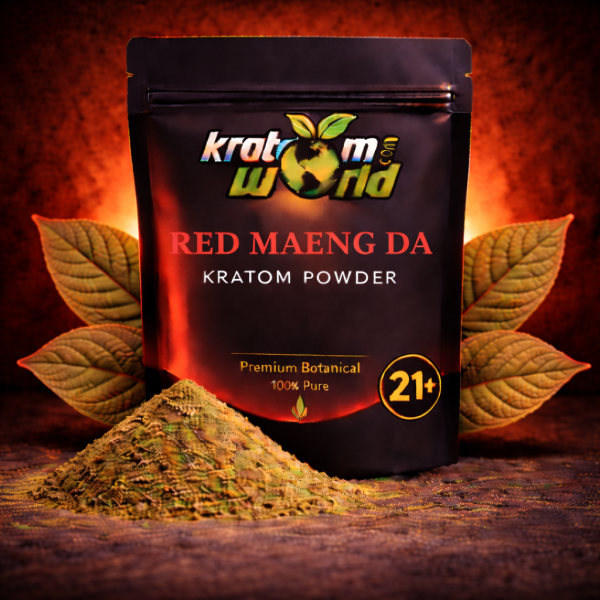
Red Maeng Da Kratom Powder
From $14.95
Single-strain red vein natural leaf powder. No extracts, no additives, no 7-OH. Multiple sizes up to a kilo.

Green Maeng Da Kratom Powder
From $14.99
Single-strain green vein natural leaf powder from a GMP-certified source. Ground leaf only.

Red Bali Kratom Powder
From $14.95
The classic red vein. Natural leaf powder, single strain, packed fresh. Read our Red Bali guide.

5 Kilo Bulk Kratom Powder (Choose Any Strains)
From $249.95
Five kilos of natural leaf powder, mix and match any strains. Our best per-kilo price for regular buyers.
7. Kratom News FAQ: October 7, 2026
Is kratom now regulated in Pennsylvania?
Not yet. House Bill 2657 passed the Pennsylvania House unanimously on October 5, 2026, but it still needs Senate approval and the governor’s signature, and the Senate has about seven session days left. If enacted, it would allow registered retailers to sell natural-leaf kratom powder and capsules to adults 21 and over, ban products above 0.5 percent 7-OH, require FDA-disclaimer labeling and child-resistant packaging, and add a 12 percent tax.
What did the Ole Miss autopsies find?
Court filings reported by Gray Television on October 2 and 3 say autopsies detected mitragynine, MGM-15 and MGPI (mitragynine pseudoindoxyl) in both students, the same compounds found in the Smax Mango Breeze pills recovered from their rooms. MGM-15 and MGPI are synthetic compounds the DEA placed in Schedule I on August 26, 2026. A store manager and his son have been charged with possession with intent to distribute. We have not seen an official cause-of-death ruling published as of this writing.
How many states ban kratom in 2026?
According to Stateline’s October 5, 2026 review, 14 states ban or schedule kratom outright, 31 regulate it in some form, 13 set potency limits, 24 impose sales restrictions such as age and labeling rules, and 14 specifically ban concentrated 7-OH. Tennessee’s full ban took effect in July 2026 and Massachusetts placed kratom in Schedule I for one year by executive order in August. Rhode Island replaced its ban with a regulated 21+ market.
Is kratom banned in Bartlett, Illinois?
Not yet. Bartlett village trustees discussed a proposed ban on the advertisement and sale of kratom, synthetic drugs and recreational nitrous oxide on October 6, 2026, with a formal vote scheduled for October 20 and a 30-day grace period if it passes. Eight other Chicago suburbs, including Naperville, Wheaton and Des Plaines, already have local sales bans. Illinois has no statewide kratom law beyond an age limit.
Does KratomWorld.com sell 7-OH, MGM-15 or extract products?
No. KratomWorld.com sells natural-leaf kratom powder and capsules only, sourced from a GMP-certified supplier, for adults 21 and older, shipped only where state and local law allow. We do not sell 7-OH, MGM-15, Pseudo-DHM, extracts, tablets, gummies or shots.