
Weekly Executive Summary · October 28, 2026
Georgia’s attorney general asks lawmakers to presume every kratom product illegal, Washington State brings its Kratom Consumer Protection Act back for 2027, San Francisco issues an MGM-15 health alert over a mislabeled “botanical extract,” and the federal 7-OH order clock is down to 16 days. Here is the week’s kratom news, read from the natural-leaf side.
In this week’s kratom news
1. Georgia: Attorney General Carr Asks Lawmakers to Presume Kratom Products Illegal
2. Washington State: HB 2291 Returns as Poison Center Calls Climb 433 Percent
3. San Francisco MGM-15 Alert: A “Cat’s Claw” Label That Was Not Cat’s Claw
4. Federal Countdown: 16 Days to the Earliest 7-OH Order, and What Congress Could Do
5. Local Ordinance Tracker: Scranton, Pottsville, Seabrook, Castle Rock, Pocatello and Utah
Last week’s summary was held back, so this edition covers a slightly longer stretch than usual: October 15 through October 28, 2026. If you missed the October 14 edition, that is where the HHS and DEA threshold announcement (1 mg per gram and a 100-to-1 mitragynine ratio) and the Senate letter from Collins, Grassley and Lee were covered in detail. Everything below is new since then.
The pattern this week is the same one we have been tracking since summer, only louder. Federal policy keeps drawing a line between concentrated or synthetic alkaloid products and the natural kratom leaf. Many state and local officials are not drawing that line at all.
That gap is the thread running through this week’s kratom news. Georgia’s top law enforcement officer wants every kratom product off the shelf unless the state has approved it first. Washington State’s legislature is being pushed toward statewide rules by city bans and poison-center numbers. And San Francisco’s health department is dealing with a product that was labeled as one plant and tested as another. Natural-leaf buyers who want to understand where the market is going should read all five stories, not just the headlines.
1. Georgia: Attorney General Carr Asks Lawmakers to Presume Kratom Products Illegal

The biggest state-level kratom news of the week came out of Atlanta on Friday, October 23. Georgia Attorney General Chris Carr told a joint legislative study committee that the state’s existing Kratom Consumer Protection Act is not protecting the public, and asked lawmakers to flip the default. Instead of allowing kratom products at retail unless they break a rule, Carr wants kratom products presumed illegal for retail sale unless the state has affirmatively approved them. In his words to the committee, as reported by FOX 5 Atlanta, “I say you ban all Kratom-related products from the beginning.”
Carr did not wait for a bill. The same day, his office issued a statement calling on convenience stores, gas stations and smoke shops across Georgia to pull kratom products from their shelves immediately, before any new law is written. The statement was picked up statewide over the weekend by Atlanta News First, WRDW, WCTV, the Valdosta Daily Times and a string of local outlets, which is why it is the most-searched kratom news story of the week.
The numbers Carr used
Carr told the committee that at least four Georgians have died this year in incidents his office attributes to kratom overdoses, and that emergency responders statewide have handled more than 315 kratom-related calls. His central argument was about labeling and consumer confusion: a shopper standing at a counter cannot tell a lawfully registered, regulated product from one that, in his phrasing, “can stop your breathing,” and in many cases the shop owner cannot either. The committee also heard from a Georgia woman whose former husband died six years ago after taking a product he believed was a natural supplement.
What was missing from the kratom news coverage is as notable as what was in it. None of the reports we read distinguished between natural-leaf kratom and the concentrated 7-OH tablets, shots and gummies that the FDA, HHS and DEA have spent 2026 separating out as the actual target of federal action. Georgia’s current KCPA already bans sales to minors and requires labeling. Carr’s proposal would replace that framework with pre-approval, and under a pre-approval system the burden would shift to every product, natural leaf included, to earn its way onto the shelf.
What happens next in Georgia
In kratom news terms, Georgia is now the state to watch. The study committee’s testimony is expected to be turned into legislation for the session that opens in January 2027. Nothing has changed in Georgia law yet, and Carr’s call for stores to pull product is a request, not an order. But an attorney general asking retailers to clear shelves voluntarily, two months before session, is the kind of pressure that tends to produce a bill with momentum.
Georgia is a large kratom market and a logistics hub for the Southeast, so a Georgia ban would matter beyond Georgia. We will be tracking bill drafts in each weekly kratom news summary as they appear. For the current state-by-state picture, see our Is Kratom Legal in 2026 guide.
2. Washington State: HB 2291 Returns as Poison Center Calls Climb 433 Percent
Washington is one of the handful of states with no statewide kratom law at all: no minimum age, no labeling rule, no registration. That vacuum is being filled city by city, and the pressure finally reached Olympia this week. In a Seattle Times report published October 23, State Representative Kristine Reeves of Federal Way confirmed she is bringing back House Bill 2291, Washington’s version of a Kratom Consumer Protection Act. The bill would ban synthetic and enhanced kratom products and put regulation of natural kratom under the state Liquor and Cannabis Board, which already inspects gas stations and convenience stores for tobacco and alcohol compliance. HB 2291 was introduced last session and did not advance.
Reeves is aiming for passage in 2027, and the kratom news out of Olympia between now and January will show whether she has the votes.
The data behind the push arrived four days later in the week’s second big Washington kratom news item. KIRO 7 reported on October 27 that the Washington Poison Center has logged a 433 percent rise in kratom and 7-OH related calls over three years, with the steepest increase in 2026: 176 calls through the end of September, and nearly one call per day in September alone. Dr. Jimmy Leonard, the center’s chief clinical officer, described 7-OH as “essentially an unregulated opioid.” Smoke shops KIRO visited said federal actions so far have had little effect on what they sell or what customers ask for.
The city bans that forced the issue
Bellingham, Mount Vernon and Spokane already prohibit kratom sales. Arlington joined them on October 19, when its city council approved a ban on the sale, distribution and advertising of kratom within city limits, effective November 18, 2026, as reported by the Everett Herald. Missoula County, across the state line in Montana, has told retailers that food-license enforcement against kratom products begins after November 2. Reeves told the Seattle Times that the strongest objection she expects is not about kratom at all, but about “the state’s coming in and telling a community what they can and can’t do.”
For natural-leaf consumers, the Washington story is a reminder that a patchwork of city bans is usually worse than a statewide KCPA. A statewide law with a synthetic ban, an age limit and labeling rules tends to protect the leaf; a wave of municipal bans tends to sweep it up. The same tension is playing out in Pennsylvania, Michigan and now Georgia.
One more data point from the Seattle Times piece worth keeping: the King, Pierce and Spokane county medical examiners said they have not documented a rise in kratom-related deaths, and in King County every one of the 75 overdose deaths involving mitragynine since 2019 also involved at least one other substance, most often fentanyl.
3. San Francisco MGM-15 Alert: A “Cat’s Claw” Label That Was Not Cat’s Claw
On October 21 the San Francisco Department of Public Health issued a health alert urging residents to avoid unregulated supplements and kratom-derived products, after the city’s medical examiner confirmed the first local death involving MGM-15, a synthetic compound derived from kratom alkaloids that the DEA placed in Schedule I on August 26. The San Francisco Chronicle reported the details on October 28. The person who died in September was a 37-year-old biotech scientist. Investigators found an empty package labeled “cat’s claw botanical extract” among his belongings. According to city health officials, the packaging listed neither MGM-15 nor kratom as an ingredient, yet kratom alkaloids were detected in it.
Hundreds of suspected products were seized from two smoke shops, and the story led local kratom news coverage in the Bay Area all week.
We are including this story because of the label, not the tragedy. A product sold under the name of a completely different plant, with no alkaloid disclosure, is exactly the kind of product that federal scheduling was built to remove and that a city health alert cannot reach fast enough. The Chronicle noted that California still has no statute that names kratom; the state relies on food-adulteration rules, and Governor Newsom’s promised crackdown has not cleared these products from shelves. MGM-15 has also been linked to deaths in Utah, Mississippi and Washington.
For background on the compound, the kratom.news explainer on MGM-15 and MGM-16 covers how the DEA order works and why it carries no threshold at all.
What a natural-leaf label looks like (a kratom news lesson)
A natural-leaf kratom product says kratom on the front. It names the plant, Mitragyna speciosa, and the strain or region. It lists one ingredient: ground leaf. It does not say “botanical extract,” “cat’s claw,” “nootropic blend” or “feel free.” It is sold as powder or plain capsules, not as a tablet, shot or gummy. KratomWorld.com products are single-ingredient natural leaf, and our GMP certification guide explains what a GMP-certified source does and does not promise. If a package in a smoke shop does not say what plant is inside it, that is the whole answer.
4. Federal Countdown: 16 Days to the Earliest 7-OH Order, and What Congress Could Do
The DEA’s revised notice of intent for 7-hydroxymitragynine and mitragynine pseudoindoxyl was published in the Federal Register on October 14 with no public comment period, which means the earliest date a temporary scheduling order can be published is November 13, 2026. As of today that is 16 days away.
Nothing new was published by DEA this week, but two things worth reading did appear in the federal kratom news stream: an updated Congressional Research Service legal sidebar (LSB11457) that lays out the full timeline and every option Congress has, and a wave of commentary on both sides, including a City Journal newsletter on October 26 headlined “Why States Should Ban Kratom” that argues for going well past 7-OH. The CRS report is the better use of your time. Here is the threshold picture it describes, in one table.
The congressional menu
The CRS sidebar is the first neutral document to line up every kratom bill in the 119th Congress side by side. The END 7-OH Act (H.R. 8000) would permanently place 7-OH and its synthetic equivalents in Schedule I while excluding 7-OH as it naturally occurs in kratom. The End Gas Station Heroin Act (S. 5383 and H.R. 10272) would schedule both 7-OH and MP with carve-outs for naturally occurring amounts and finished kratom products, and would regulate commercial activity rather than possession. The Safe Sips Act (H.R. 9913) would require color-coded packaging for drinks containing kratom-related substances.
The part of the CRS report that should be in every kratom news summary is this: CRS points out that Congress could schedule the whole plant, or mitragynine itself, without any of the fact-finding the DEA must do under the Controlled Substances Act, citing the HALT Fentanyl Act as the precedent. That last paragraph is the one the natural-leaf industry should read twice.
Two other federal threads remain open. The American Kratom Association’s lawsuit asking the D.C. federal court to declare that the MGPI order does not reach botanical leaf with trace, naturally formed pseudoindoxyl is still pending with no ruling reported; the kratom.news breakdown of the AKA complaint explains why the revised threshold notice may have answered part of it. And the Senate letter from Collins, Grassley and Lee asking for permanent scheduling and a whole-plant review has not drawn a public reply from DEA or FDA.
For the plain-language version of what is and is not banned right now, kratom.news keeps an updated “Is kratom banned?” explainer, and its notice-of-intent summary covers the October 14 Federal Register text.
5. Local Ordinance Tracker: Scranton, Pottsville, Seabrook, Castle Rock, Pocatello and Utah
The local ban wave did not slow down over the past two weeks, and it fills most of the kratom news feeds we monitor. What changed is the texture: more councils are now splitting the question into “minors” and “adults,” and more are writing synthetic-only language. Here is the tracker.
Three details worth pulling out of this week’s local kratom news
First, Scranton. After six months of debate the council deliberately chose a minors-only ordinance and left the adult ban on the table, with Councilman Patrick Flynn saying adult sales “would be better addressed by the state.” That is a direct reference to Pennsylvania HB 2657, the Kratom Standards, Labeling and Consumer Protection Act, which passed the House 202-0 on October 5 and is sitting in the Senate Health and Human Services Committee. If Harrisburg acts before the session ends, Scranton’s adult ordinance likely never comes off the table.
Second, Utah. The KUTV report is the clearest picture yet of what enforcement looks like in a state that regulates by product type: pure leaf kratom remains legal to sell, kratom drinks and additive products do not, and a special State Bureau of Investigation unit is pursuing retailers, with a defense attorney describing a list of banned products that “changes faster than retailers can keep up with.”
Third, Castle Rock. A 6-1 vote with a full retail ban, no possession penalty, and a smoke shop telling CBS Colorado that kratom was 40 percent of its sales. That is the economic shape of these ordinances, and it is why more of them are coming.
6. What This Means for Natural-Leaf Buyers
Nothing in this week’s kratom news changes the federal legality of natural-leaf kratom powder or capsules. The DEA’s pending 7-OH order is built around a threshold that HHS says reflects the alkaloid profile of natural leaf, and the leaf itself is not on any scheduling notice. What is changing is the state and local map. Georgia could move from a KCPA state to a pre-approval or ban state in 2027. Washington could go either way: a statewide KCPA, or a dozen more city bans. Colorado towns are banning retail sales under a state law that was supposed to regulate instead.
If you live in or ship to any of these places, check your city as well as your state before you order, and keep checking. Our legality guide is updated as laws change.
The San Francisco story is the practical lesson of the week. Read the label. Every kratom news cycle now includes a mislabeled product; if a product does not say kratom, does not name Mitragyna speciosa, and does not list ground leaf as the ingredient, it is not a natural-leaf kratom product, whatever the shop calls it. Powder and plain capsules from a vendor that names its strains and its source are the simplest way to stay on the natural-leaf side of every line that is being drawn right now. For how to evaluate a vendor, see our 2026 vendor guide, and for bulk pricing, our kilo pricing comparison.
KratomWorld.com sells natural-leaf kratom powder and capsules from a GMP-certified source. No 7-OH, no MGM-15, no MGPI, no tablets, no gummies. Adults 21 and older. Here are three of our most-ordered single-strain powders and the bulk option, the same products we point to every week in this kratom news summary.
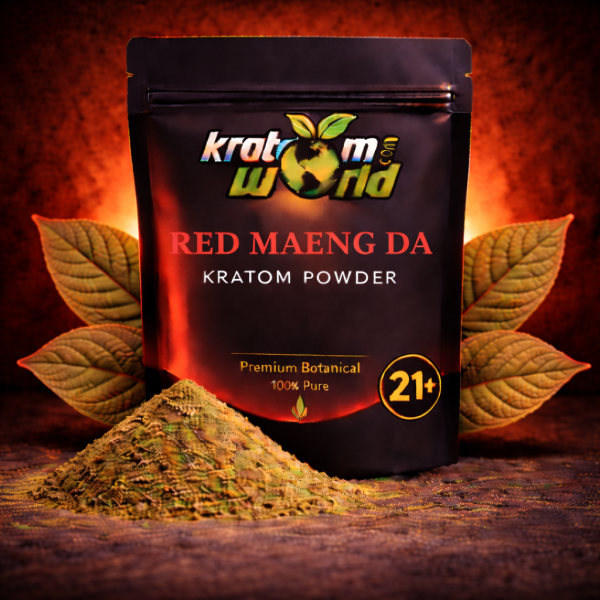
Red Maeng Da Kratom Powder
From $14.95
Single-strain red vein natural leaf powder. No additives, no 7-OH. Multiple sizes up to a kilo. See our Maeng Da guide.

Green Maeng Da Kratom Powder
From $14.99
Single-strain green vein natural leaf powder. One ingredient, labeled by strain and source. Sizes from 100 g to a kilo. Read about vein colors.

Red Bali Kratom Powder
From $14.95
Classic red vein natural leaf powder and one of our most-ordered strains. Single ingredient, no extracts. See the Red Bali guide.

5 Kilo Bulk Kratom Powder (Choose Any Strains)
From $249.95
Five kilos of natural leaf powder, mix any strains. The lowest per-kilo price on the site. Compare in our kilo buying guide.
7. Kratom News FAQ: October 28, 2026
Is kratom banned in Georgia now?
No. Georgia’s Kratom Consumer Protection Act is still the law, and it allows regulated adult sales. On October 23, 2026, Attorney General Chris Carr asked a legislative study committee to replace that framework with a system under which kratom products are presumed illegal for retail sale unless the state approves them, and he asked stores to pull products voluntarily. Any change would require a bill in the 2027 session.
When does the federal 7-OH ban take effect?
The DEA’s revised notice of intent for 7-OH and mitragynine pseudoindoxyl was published October 14, 2026 with no comment period, so the earliest a temporary scheduling order can be published is November 13, 2026. The order would run two years. It targets products above 1 mg per gram (or per mL) or with a mitragynine-to-7-OH ratio below 100 to 1. Natural kratom leaf below the threshold is excluded.
What is MGM-15 and is it in natural kratom?
MGM-15 is a synthetic compound made from kratom alkaloids. It does not occur in the natural leaf. The DEA placed MGM-15 and MGM-16 in Schedule I on August 26, 2026 with no threshold, so any amount is a controlled substance. The San Francisco case reported this week involved a product labeled as “cat’s claw botanical extract” that did not list kratom or MGM-15 on the package.
Is kratom legal in Washington State?
There is no statewide kratom law in Washington, so kratom is legal by default at the state level, with no minimum age. Several cities have their own bans, including Bellingham, Mount Vernon, Spokane and, effective November 18, 2026, Arlington. Representative Kristine Reeves plans to reintroduce HB 2291, a Kratom Consumer Protection Act, for the 2027 session.
Does KratomWorld.com sell 7-OH, MGM-15 or extract tablets?
No. KratomWorld.com sells natural-leaf kratom powder and plain capsules from a GMP-certified source, sold by strain and region. We do not sell 7-OH products, MGM-15, MGPI, tablets, shots or gummies. Orders are limited to adults 21 and older and to states and localities where natural-leaf kratom is legal.