
WEEKLY EXECUTIVE SUMMARY · OCTOBER 14, 2026
The week’s most-read kratom news, condensed for natural-leaf buyers: HHS and the DEA replace the July 7-OH proposal with a 1 mg/g concentration test and a 100-to-1 ratio test, three senators ask for permanent scheduling, the American Kratom Association takes its case to the Capitol, a federal detention hearing adds detail to the Ole Miss case, and Michigan debates a ban versus regulation.

This week’s kratom news is the federal story this series has been waiting on since July. On Thursday, October 8, the Department of Health and Human Services sent the Drug Enforcement Administration a revised scheduling recommendation for 7-hydroxymitragynine (7-OH) and mitragynine pseudoindoxyl (MGPI). On Friday, October 9, the Department of Justice announced that the DEA would adopt it, withdrawing the July notice and its 0.05 percent threshold in favor of a two-part test: a concentration limit of 1 milligram per gram for solids (1 milligram per milliliter for liquids) and a ratio rule that controls any product with less than 100 times as much mitragynine as 7-OH or MGPI. The new notice of intent was published in the Federal Register today, October 14, starting a 30-day clock before a temporary Schedule I order can issue. HHS Secretary Robert F. Kennedy Jr. summed up the intent in one line: “We are drawing a clear line between natural kratom and dangerous, enhanced opioid products.”
The rest of the week filled in around that announcement. Senators Susan Collins, Chuck Grassley and Mike Lee wrote to the DEA and FDA on October 7 asking for permanent scheduling of 7-OH and the related compounds, plus an FDA review of the entire kratom plant. The American Kratom Association answered with a press conference on the Capitol grounds on October 13 and a Rayburn briefing this morning. In Mississippi, a federal detention hearing on October 9 put more of the Ole Miss investigation on the record, including what defense counsel and prosecutors said about the toxicology. In Michigan, Axios Detroit reported on October 13 that lawmakers are split between a House ban bill and a Senate regulation bill. And in Illinois, Bartlett pushed its sales-ban vote to October 20 after nine speakers asked trustees to separate leaf from synthetics. Sources are linked throughout. Our previous edition is here: Kratom News October 7, 2026: Pennsylvania House Passes HB 2657.
In this summary
1. HHS and DEA set the 7-OH threshold: 1 mg/g and a 100-to-1 ratio
2. Collins, Grassley and Lee ask for permanent scheduling and a whole-plant review
3. AKA takes the leaf-versus-synthetic case to the Capitol
4. Ole Miss detention hearing: what was said about the toxicology
5. State and local watch: Michigan, Bartlett and Pennsylvania
1. HHS and DEA Set the 7-OH Threshold: 1 mg/g and a 100-to-1 Ratio
The sequence matters, so here it is in order. In July 2025, HHS first recommended placing 7-OH above a threshold in Schedule I. In July 2026, the DEA published a notice of intent to temporarily schedule 7-OH above 0.05 percent by weight, along with a 1-milligram-per-product limit for certain processed products, and HHS opened a comment period on the number. On August 26, the DEA temporarily scheduled MGPI, MGM-15 and MGM-16 with no concentration exemption at all. Then on October 8, HHS sent the DEA a revised recommendation, and on October 9 the Justice Department announced two new notices of intent: one that reissues the MGM-15 and MGM-16 approach unchanged, and one that replaces the 7-OH plan with the HHS thresholds and extends them to MGPI.
The two-part test
Under the new notice, 7-OH, MGPI, or the two combined would be controlled in Schedule I if a product meets either of two conditions. The first is concentration: more than 1 milligram per gram in powders, capsules or other solids, or more than 1 milligram per milliliter in liquids. That works out to 0.1 percent by weight, double the July figure. The second is ratio: if the mass of mitragynine divided by the mass of 7-OH, MGPI or their combined amount is less than 100, the product is controlled regardless of concentration. Meeting either prong is enough. HHS said the combination is designed to separate “intentionally enhanced or concentrated” products from products whose alkaloid profile matches the botanical leaf, which contains 7-OH at what the department called “relatively low or trace levels.”
What the agencies said, and what they did not say
The HHS release leaned on the FDA’s review of the science. The FDA found 7-OH to be roughly two to nine times more potent than morphine in preclinical studies, depending on the study, and found evidence of a meaningful risk of opioid-like physical dependence and withdrawal from MGPI. Assistant Secretary for Health Admiral Brian Christine said the threshold approach lets the department “focus on the products that pose the greatest threat to public health.” Attorney General Todd Blanche put the enforcement view more bluntly in the DOJ release: “Dangerous and addictive opioids do not belong behind convenience store counters.”
Two caveats belong next to the headline. First, the DEA wrote in the notice that excluding certain products from Schedule I “would not constitute a determination that they are safe for consumption,” and said it remains concerned about concentrated kratom products marketed as opioid alternatives in tablets, powders, gummies and liquids. Second, the ratio prong means a product can sit under the 0.1 percent concentration line and still be controlled if its mitragynine content is too low relative to 7-OH. HHS framed the ratio as a way to catch products that have been chemically manipulated while leaving the leaf’s natural alkaloid balance alone, but the notice does not use the words “natural leaf,” and the agencies have not published a list of products that pass or fail. The Federal Register document is DEA-1570, 91 FR 65370, and the formal comment period on the July notice is closed; this notice does not open a new one. The 7-OH scheduling order itself has still not been issued. Sources: HHS press release, DOJ Office of Public Affairs, Federal Register 2026-20943, The Marijuana Herald, Becker’s Behavioral Health. For a running timeline of every federal 7-OH action since July 2025, see kratom.news.
2. Collins, Grassley and Lee Ask for Permanent Scheduling and a Whole-Plant Review
One day before the HHS recommendation landed, three Republican committee chairs sent the DEA and FDA a letter that asks for considerably more than a threshold. Senators Susan Collins of Maine (Appropriations), Chuck Grassley of Iowa (Judiciary) and Mike Lee of Utah (Energy and Natural Resources) wrote to DEA Administrator Terrance Cole and the FDA on October 7 with three requests. First, issue the emergency scheduling order for 7-OH immediately and promulgate the final order “expeditiously.” Second, begin proceedings to permanently place 7-OH, MGM-15, MGM-16 and MGPI in Schedule I. Third, and this is the part that natural-leaf buyers should read twice, have the FDA conduct a scientific and medical evaluation and give the DEA a permanent scheduling recommendation for the full kratom plant, its derivatives and its semi-synthetic analogues.
The letter cites the DEA’s own finding that kratom-derived concentrates and semi-synthetic analogues are more potent than Schedule II opioids, puts oral 7-OH at about 14 times the potency of morphine, and points to 14,449 kratom exposure reports to poison control centers from 2015 through 2025, a figure the senators say represents a 1,200 percent increase over ten years. It also cites NDEWS and National Poison Data System records of suspected nonfatal overdose encounters involving 7-OH, mitragynine or kratom in 38 states between 2023 and 2026. The senators wrote that they “worry the availability of these products is providing consumers with a false sense of security” because they are marketed as natural.
The practical read: the executive branch and three senior senators now agree on 7-OH and are far apart on the leaf. The HHS recommendation explicitly tries to keep botanical kratom out of Schedule I; the senators’ third request would put the whole plant through the eight-factor analysis that could eventually schedule it. The DEA announced an emergency scheduling intent for the leaf in 2016 and withdrew it after public and congressional pushback, and HHS rescinded its own 2017 scheduling recommendation in 2018. Whether this letter reopens that process is the federal question to watch through the end of the year. Sources: Sen. Collins release, letter (PDF), Pain News Network.
3. AKA Takes the Leaf-Versus-Synthetic Case to the Capitol
The American Kratom Association moved fast after the October 9 announcement. On Monday, October 12, it announced a press conference for Tuesday, October 13 at 11:00 a.m. Eastern on the U.S. Capitol grounds, followed by a congressional briefing this morning, Wednesday, October 14 at 9:00 a.m., in Room 2168 of the Rayburn House Office Building, the Gold Room. Both events were billed as covering the DOJ and DEA scheduling action and what it means for consumers, states and Congress, with the briefing livestreamed on the AKA’s YouTube channel. The release said attendees would include members of Congress, staff, media, AKA policy and scientific experts, and “Americans directly harmed by synthetic products falsely marketed as kratom.”
The AKA’s framing is the same one it has used all year and it now has a federal document to point at: the HHS thresholds, in the association’s words, distinguish natural kratom from chemically manipulated products. The release also took direct aim at coverage of the University of Mississippi investigations, saying media reports have mischaracterized botanical kratom and warning against labeling synthetics as “kratom.” On policy, the AKA restated its support for age restrictions, accurate labeling, contaminant testing, good manufacturing practices and enforcement against adulterated, synthetic or mislabeled products, while opposing any ban on natural leaf. The timing was no accident. With the Collins, Grassley and Lee letter asking the FDA to evaluate the whole plant, the association is trying to lock in the HHS distinction before Congress or the agencies revisit it. We will cover what was actually said at the briefing next week once the recording and any member statements are available. Source: AKA release via EZ Newswire.
4. Ole Miss Detention Hearing: What Was Said About the Toxicology
Last week’s edition covered the October 2 federal charges against Yahya Mosleh and his son Islam, who worked at Puffs Vape, Tobacco and Beer Store in Oxford, Mississippi. On Friday, October 9, a federal detention hearing put more of the case on the record, and the reporting by Gray Television’s KOLD deserves a careful summary because of how it has been repeated elsewhere. The students, Aidan Hamilton, 18, and Robert Strang, 20, died on September 21. According to the hearing coverage, a defense attorney for the Moslehs told the court that one student died from the combined use of various substances, including cough syrup, and the other from inhalation asphyxiation. Federal prosecutors said in closing that the evidence “supports the detention” and that the two “died of conditions consistent to overdoses.” The toxicology report itself has not been made public, and we have still not seen an official medical examiner ruling. Headlines that say the causes of death were “revealed” are describing courtroom statements, not a published autopsy finding.
What the hearing did confirm tracks last week’s reporting: both students reportedly had mitragynine, MGM-15 and MGPI in their systems, the same three compounds associated with the Smax Mango Breeze pills recovered in the investigation. MGM-15 and MGPI have been Schedule I since August 26. Investigators allege Puffs sold Hamilton pills twice in the days before his death and that bank records provided by the families show each student made a purchase at the store on September 20. A confidential informant’s buy at the store produced the clerk’s warning that “people are dying from them,” and police seized about 500 units of kratom and kratom-like products plus THC products in the search. The court ordered Yahya Mosleh held while the case proceeds and released Islam Mosleh on a $20,000 unsecured bond with conditions. Note the chemistry once more, because it is the whole point of the federal thresholds in Section 1: tablets built on MGM-15 and MGPI are synthetic products that would fail both the concentration and ratio tests, and they are not ground leaf. Sources: KOLD / Gray Television, SuperTalk Mississippi, CBS News.
5. State and Local Watch: Michigan, Bartlett and Pennsylvania
Michigan: ban bill versus regulation bill
Michigan has no kratom statute at all, and Axios Detroit reported on October 13 that the Ole Miss case has sharpened a split in Lansing. House Bill 5537, which passed the House in March and was celebrated by Rep. Cam Cavitt of Cheboygan, would ban kratom outright along with potent synthetic derivatives such as 7-OH. Senate Bill 1181 would instead regulate the market, requiring warnings and serving information on labels and banning the highly potent derivatives while leaving the leaf legal for adults. The data in the piece came from Varun Vohra, a clinical toxicologist and senior director at the Michigan Poison and Drug Information Center at Wayne State: 347 cases involving kratom, 7-OH or similar synthetics from 2021 through 2025, 87 of them in 2025, an 81 percent jump over 2024, with 7-OH exposures linked to more severe withdrawal and greater intensive-care needs than other kratom exposures. Vohra’s conclusion was not a ban. “People are going to procure these items in some shape or form or another,” he said, favoring a science-informed framework. Cavitt called the gas-station products a crisis. Detroit City Council members said they want more information before backing a statewide ban, and the University of Michigan and Michigan State said their data do not show significant campus use. Neither bill has moved since the article ran. Source: Axios Detroit.
Bartlett, Illinois: vote delayed to October 20
We previewed Bartlett’s proposed sales ban last week. At the October 6 hearing, nine speakers, most of them joining by Zoom from out of state, asked trustees to distinguish natural leaf from enhanced synthetic products, and the board postponed its vote to research the issue further. Trustee Ray Deyne was ready to proceed; others wanted more information. The proposal from Police Chief Ryan Conway would ban the advertising and sale of kratom, related synthetics and recreational nitrous oxide, but not possession or use. “We’re seeing that the marketing is way too fast for us to regulate,” Conway said. Village President Dan Gunsteen blamed Springfield: “If the state of Illinois had done their job, we wouldn’t be here today.” Craig Katz of wholesaler MNG Brands told the board the industry agrees on synthetics: “We do not want synthetics in the marketplace.” Trustees could vote at their October 20 meeting. Eight other Chicago suburbs already have local sales bans. Source: Daily Herald.
Pennsylvania: HB 2657 waits on the Senate
House Bill 2657, which passed the Pennsylvania House unanimously on October 5 with a 21+ rule, a natural-leaf-only product definition and a 0.5 percent 7-OH cap, had not received a Senate committee vote as of this writing. The Senate has a handful of session days left before the two-year session ends, and any bill that does not clear both chambers dies and must be reintroduced in 2027. We will report a Senate vote the week it happens. For the full provision table, see last week’s edition linked above.
6. What This Means for Natural-Leaf Buyers
Three takeaways from this week’s kratom news. First, the federal line is now drawn in numbers rather than adjectives. A product is headed for Schedule I if it carries more than 1 milligram of 7-OH or MGPI per gram, or if it has less than 100 times as much mitragynine as those compounds. Ground leaf powder and capsules are the product category HHS said it was trying to keep out of the schedule; tablets, gummies, shots and “enhanced” powders are the category it was trying to put in. Second, the 30-day clock that started today is not a comment period and not a ban on anything yet. MGM-15, MGM-16 and MGPI remain Schedule I under the August order; 7-OH above the threshold becomes Schedule I only when the DEA publishes the temporary order, which cannot happen before mid-November. Third, the Senate letter is a reminder that the leaf’s federal status is a policy argument, not a settled fact, and that state and local law still decide whether a package can be delivered to your door. Our legality guide is updated as laws and ordinances pass, and we ship only where the law allows. For what a GMP-certified source does and does not mean, see our GMP certification overview, and for the science behind the federal review, our 2026 safety study summary.
KratomWorld.com sells natural-leaf kratom powder and capsules from a GMP-certified source. No 7-OH, no MGM-15, no MGPI, no tablets, no gummies. Adults 21 and older. Here are three of our most-ordered single-strain powders and the bulk option.
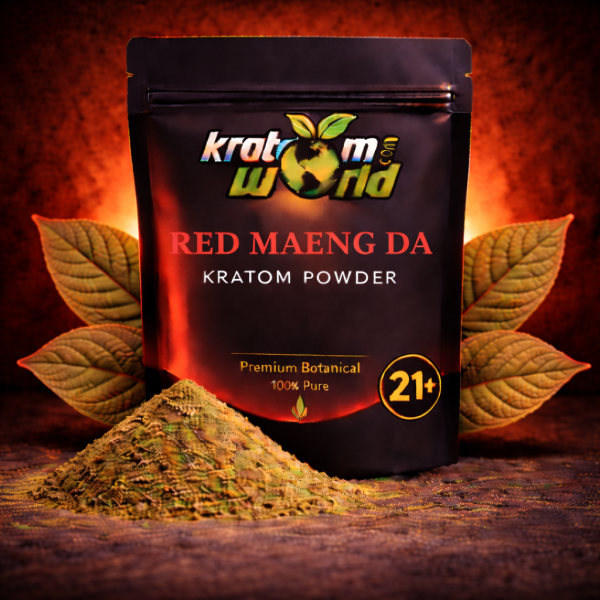
Red Maeng Da Kratom Powder
From $14.95
Single-strain red vein natural leaf powder. No additives, no 7-OH. Multiple sizes up to a kilo. See our Maeng Da guide.

Green Maeng Da Kratom Powder
From $14.99
Single-strain green vein natural leaf powder from a GMP-certified source. Ground leaf only.

Red Bali Kratom Powder
From $14.95
The classic red vein. Natural leaf powder, single strain, packed fresh. Read our Red Bali guide.

5 Kilo Bulk Kratom Powder (Choose Any Strains)
From $249.95
Five kilos of natural leaf powder, mix and match any strains. Our best per-kilo price for regular buyers. See where to buy kratom kilos.
7. Kratom News FAQ: October 14, 2026
What is the new federal 7-OH threshold?
Under the DEA notice of intent published October 14, 2026 (Docket DEA-1570), 7-OH, MGPI or the two combined would be placed in Schedule I when a product contains more than 1 milligram per gram in solid form or 1 milligram per milliliter in liquid form, or when the product’s mitragynine content is less than 100 times its 7-OH and MGPI content. Meeting either test triggers control. This replaces the July 2026 proposal, which used a 0.05 percent threshold and no ratio test.
Is natural-leaf kratom being scheduled by the DEA?
Not under this action. HHS said the concentration and ratio thresholds were designed to target concentrated or chemically altered products while distinguishing them from natural botanical kratom, which contains 7-OH at relatively low or trace levels. The DEA cautioned that excluding a product from Schedule I is not a determination that it is safe. Separately, Senators Collins, Grassley and Lee asked the FDA on October 7 to evaluate the full kratom plant for a permanent scheduling recommendation, which would be a new and longer process. State and local laws vary and still apply.
When does 7-OH become Schedule I?
Not before 30 days after the October 14, 2026 Federal Register publication, so no earlier than mid-November. The DEA has not yet issued the temporary scheduling order. Once issued, it lasts two years with a possible one-year extension while permanent scheduling is pursued. MGM-15, MGM-16 and MGPI are already in Schedule I under the August 26, 2026 order, which stays in effect until replaced.
Has an official cause of death been released in the Ole Miss case?
Not that we have seen. At an October 9, 2026 federal detention hearing, a defense attorney said one student died from the combined use of substances including cough syrup and the other from inhalation asphyxiation, and prosecutors said the deaths were consistent with overdoses. The toxicology report, which reportedly found mitragynine, MGM-15 and MGPI in both students, has not been made public, and no medical examiner ruling has been published. Yahya Mosleh remains in custody; Islam Mosleh was released on a $20,000 unsecured bond.
Does KratomWorld.com sell 7-OH, MGM-15 or MGPI products?
No. KratomWorld.com sells natural-leaf kratom powder and capsules from a GMP-certified source, for adults 21 and older, shipped only where state and local law allow. We do not sell 7-OH, MGM-15, MGM-16, MGPI, Pseudo-DHM, tablets, gummies or shots.