
WEEKLY EXECUTIVE SUMMARY · JULY 22, 2026
The week’s biggest kratom news headlines, condensed for natural-leaf powder and capsule shoppers — what changed, what didn’t, and what to watch before August.
The biggest kratom news of the past week was not a new ban — it was a fight over who gets to shape the federal record on 7-hydroxymitragynine (7-OH). On July 17, 2026, the American Kratom Association sent a formal letter to the U.S. Department of Health and Human Services alleging that the federal public-comment docket on 7-OH has been flooded with duplicate, anonymous, and financially incentivized submissions. Meanwhile, the clock is running: the federal comment window closes July 31, and North Carolina’s new age-restriction rules for kratom products took effect on July 15.
Here is the short version of this week’s kratom news for anyone who buys natural-leaf kratom powder or capsules: none of this week’s federal activity targets plain, unadulterated kratom leaf. Every agency involved — DEA, HHS, and FDA — has repeatedly drawn a line between concentrated and synthetic 7-OH products and the ground leaf itself. Below is the full breakdown, with dates, thresholds, and the practical takeaways.
In This Week’s Kratom News Summary
- AKA Asks HHS to Discount a “Corrupted” 7-OH Docket
- Kratom News Deadline: 7-OH Comment Window Closes July 31
- North Carolina’s 21+ Kratom Rules Took Effect July 15
- Kratom News Context: Why Natural Leaf Is Treated Differently
- What Natural-Leaf Shoppers Should Do Before August
- Shop Natural-Leaf Kratom Powder & Capsules
- Kratom News FAQ
1. AKA Asks HHS to Discount a “Corrupted” 7-OH Docket

On July 17, 2026, Mac Haddow, Senior Fellow on Public Policy at the American Kratom Association, wrote to Admiral Brian Christine, M.D., Assistant Secretary for Health at HHS. The subject line is blunt: “Coordinated, Duplicate, Fictitious, and Financially Incentivized Comments Submitted to Docket No. HHS-OASH-2026-0232.”
The letter’s core argument is procedural. HHS did not ask the public whether it likes 7-OH products. It asked a narrow, technical question: what scientific data supports a specific concentration threshold above which 7-OH presents an imminent hazard to public safety, and are there better ways to express or measure that threshold? Comments collected on that docket are transmitted to the Attorney General for use in the temporary scheduling process.
What the AKA Says It Documented
Three exhibits accompany the letter. The first is a screenshot of a commercial 7-OH retailer offering $20 in store credit to customers who submit a comment to the federal docket and send back a screenshot as proof. The second and third are Reddit posts in which users instruct one another to file multiple comments using incognito browsers, different email addresses, different phone numbers, and different names — with one commenter stating they had already filed three.
The AKA also objects to advocacy messaging that frames consumer testimonials as “safety data.” Its position is that an uncontrolled anecdote cannot establish the concentration consumed, whether other compounds were present, whether labeling was accurate, or what threshold is scientifically necessary — and therefore should not be weighed the same as toxicology, pharmacokinetics, or adverse-event datasets.
The requested remedies are specific: don’t evaluate the docket by raw comment volume, identify likely duplicate submissions using metadata and language patterns, separately categorize compensated and form-generated comments, restate the limited scientific purpose of the request, and give the Attorney General an assessment of docket integrity when the comments are transmitted.
Whatever you make of the dispute, the practical signal for shoppers is the same one we flagged in our 2026 kratom legality guide: the federal argument is about concentrated and synthetic 7-OH, not about ground leaf.
2. Kratom News Deadline: Federal 7-OH Comment Window Closes July 31, 2026
The docket at the center of that letter has a hard deadline. On July 6, 2026, two notices appeared in the Federal Register: the DEA’s notice of intent to temporarily place 7-OH above a specified threshold into Schedule I, and the HHS Office of the Assistant Secretary for Health’s Request for Information on that threshold.
Comments are due July 31, 2026. Because a temporary scheduling order cannot take effect until at least 30 days after publication, the earliest possible effective date falls in early August 2026. A temporary order runs for up to two years, with the possibility of a one-year extension while permanent scheduling is considered.
The Threshold Everyone Is Arguing About
The DEA’s proposed line is roughly 0.05% 7-OH by dry weight, or more than about 1 milligram of 7-OH per serving. Alongside 7-OH itself, three lab-made compounds that do not occur naturally in the kratom plant are named: mitragynine pseudoindoxyl, MGM-15, and MGM-16. Products that sit below the threshold — which is where ordinary ground leaf sits — are not the target of the action. The threshold number is precisely what HHS asked the public to comment on, which is why the AKA is arguing so hard about who is filling that record.
3. North Carolina’s 21+ Kratom Rules Took Effect July 15
At the state level, the biggest date in this week’s kratom news was July 15, 2026. North Carolina’s House Bill 328 — a broad hemp-and-cannabinoid measure that also carries kratom provisions — cleared the House 66–35 on July 1 and the Senate 37–6 on July 2, with the kratom sections written to take effect July 15, 2026.
Those provisions do three things. They ban the sale, delivery, and possession of synthetic kratom products. They prohibit selling or delivering any kratom product to anyone under 21. And they prohibit possession of kratom by anyone under 21. Violations are Class 2 misdemeanors. Separately, the bill shifts North Carolina’s hemp law to a total-THC standard later this year and adds xylazine to the state’s Schedule III on December 1, 2026.
Two things worth noting. First, this is a regulation-and-age-gate approach, not a prohibition on natural leaf — the same broad direction as the Kratom Consumer Protection Act laws now on the books in a growing list of states. Second, because HB 328 moved as part of a larger package, North Carolina retailers and buyers should confirm the bill’s final status and text directly with the North Carolina General Assembly rather than relying on news summaries. For a running feed of state-by-state movement, we also track the latest kratom news as legislatures act.
4. Kratom News Context: Why Natural Leaf Is Still Treated Differently
The most repeated line across this year’s kratom news out of Washington is also the one most often lost in headlines. DEA and HHS have both stated that the scheduling action addresses concentrated and enhanced 7-OH products and the named synthetic derivatives, and is not intended to apply to natural kratom leaf containing only naturally occurring trace levels of 7-OH. The FDA’s own kratom page maintains a parallel distinction in its public-health messaging.
That is why the industry’s two largest trade groups — the American Kratom Association and the Global Kratom Coalition — both lobbied in favor of scheduling concentrated 7-OH. Their argument, in one sentence: chemically manipulated 7-OH isn’t kratom, and letting it be marketed as kratom puts the leaf market at risk.
For a shopper, the practical translation is that sourcing and labeling matter more than ever. A vendor that sells only unadulterated leaf powder and capsules, follows GMP manufacturing standards is on an entirely different side of this regulatory line than a gas-station shelf stocked with high-concentration extracts and shots.
5. What Natural-Leaf Shoppers Should Do Before August
Nothing in this week’s kratom news requires a natural-leaf buyer in a legal state to change anything. Still, a short checklist is worth running while the federal timeline plays out:
- Confirm your local law, not just your state law. County and municipal ordinances have moved faster than statehouses in several states this year.
- Read the label for concentration language. Terms like “enhanced,” “7-OH,” “extract shot,” and milligram-per-serving alkaloid callouts describe a different product category than plain leaf powder.
- Ask about the vendor’s sourcing standards. A clear answer about GMP-certified sourcing is the single most useful signal a vendor can give you.
- Verify the vendor’s age policy. With states like North Carolina writing 21+ into statute, age verification at checkout is becoming a baseline compliance expectation, not a courtesy.
- If you want to comment, comment on the science. Per the HHS notice, the request is for data on the threshold — not a referendum.
If you’re newer to the category, our kratom vein colors guide and vendor comparison for 2026 cover the basics of how strains and sourcing are described.
Shop Natural-Leaf Kratom Powder & Capsules
None of this week’s kratom news changes what we stock. Every product below is single-origin, natural-leaf kratom — ground leaf, nothing added, nothing concentrated. Available to adults 21 and older in states and localities where kratom is legal.
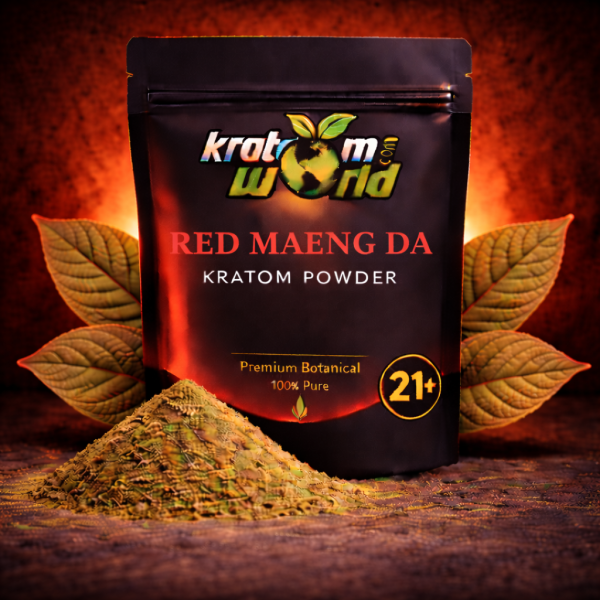
Red Maeng Da Kratom
From $14.95
One of the most requested red-vein natural leaf powders we stock. Finely milled, GMP-sourced, and available in powder or capsules.

Green Maeng Da Kratom
From $14.99
Green-vein natural leaf, harvested and dried to a consistent grind. Sold as loose powder or pre-filled capsules.

Red Bali Kratom
From $14.95
A long-standing red-vein staple, smooth and full-bodied. Read our full Red Bali guide.

5 Kilo Bulk Kratom Powder (Choose Any Strains)
From $249.95
Mix and match five kilos of any natural-leaf strains we carry — our lowest per-kilo pricing for regular buyers.
Kratom News FAQ
Is natural-leaf kratom being banned by the DEA?
No. The DEA’s temporary scheduling action covers 7-hydroxymitragynine above a proposed threshold of roughly 0.05% by dry weight (about 1 mg per serving) plus three synthetic compounds — mitragynine pseudoindoxyl, MGM-15, and MGM-16 — that do not occur naturally in the plant. DEA and HHS have both stated the action is not intended to apply to natural kratom leaf containing only trace, naturally occurring 7-OH. State and local law still governs whether kratom can be sold where you live.
When does the federal 7-OH comment period close?
July 31, 2026. The HHS Office of the Assistant Secretary for Health opened Docket No. HHS-OASH-2026-0232 with the Federal Register publication on July 6, 2026, and comments submitted through Regulations.gov are due by July 31. Because a temporary order cannot take effect until at least 30 days after publication, the earliest possible effective date is in early August 2026.
What is the American Kratom Association asking HHS to do?
In a July 17, 2026 letter to the Assistant Secretary for Health, the AKA asked HHS not to judge the docket by raw comment volume, to identify likely duplicate submissions, to separately categorize compensated and form-generated comments, to restate that the request seeks scientific evidence on the threshold rather than opinions, and to advise the Attorney General that submission counts may have been artificially inflated.
What changed for kratom in North Carolina on July 15, 2026?
North Carolina’s House Bill 328 carries kratom provisions dated to take effect July 15, 2026: a ban on the sale, delivery, and possession of synthetic kratom products, a prohibition on selling or delivering kratom products to anyone under 21, and a prohibition on possession by anyone under 21. Violations are Class 2 misdemeanors. Because the kratom language moved inside a larger hemp package, confirm the final enacted text with the North Carolina General Assembly before relying on it.
How can I tell natural-leaf kratom from a concentrated 7-OH product?
Read the label carefully. Natural-leaf products are simply dried, ground Mitragyna speciosa leaf sold as powder or in capsules, with no isolated or added alkaloids. Concentrated products typically advertise “7-OH,” “enhanced,” “extract,” or a milligram-per-serving alkaloid figure on the front of the package. A clearly labeled, single-strain product from a GMP-certified source is the clearest way to know what you are buying.
That is the full kratom news picture for the week ending July 22, 2026. We publish a new kratom news Executive Summary every Wednesday — bookmark this page and check back next week for the federal comment-deadline outcome and any new state action.