
WEEKLY EXECUTIVE SUMMARY · JULY 15, 2026
Your seven-day roundup of the kratom news that actually moved this week — federal, state and local — written plainly for natural-leaf buyers 21 and over.
On this page
This Week at a Glance
The big federal kratom news of early July — the DEA’s two Notices of Intent on concentrated and synthetic 7-hydroxymitragynine (7-OH) — is now in its public comment phase. But the most interesting movement in the past seven days happened somewhere else: the American Kratom Association turned its fire on the 7-OH industry, and two states saw enforcement and local-government action aimed at kratom retail generally.
Here is the honest shape of the week: the federal action continues to draw a clear line between natural kratom leaf and chemically manipulated 7-OH. Local and state activity is not always drawing that same line. Both facts matter if you buy kratom.
AKA Warns Consumers Not to Let the 7-OH Industry Hijack the HHS Docket

The clearest kratom news of the week came on July 13, when the American Kratom Association (AKA) issued a warning aimed not at regulators but at its own side of the industry. The AKA said manufacturers and vendors of chemically manipulated 7-OH products are pushing natural kratom leaf consumers to flood the HHS Request for Information (RFI) with comments opposing the scheduling of concentrated 7-OH.
The AKA’s objection is procedural, and it is worth understanding. The HHS RFI is not a referendum. It is a narrow request for scientific evidence on two questions: whether the proposed 7-OH threshold should be adjusted, and whether a different method of measuring that threshold would better protect public safety. HHS asked for toxicology, pharmacology, analytical chemistry and product-testing data — not personal testimonials.
“Consumers who care about natural kratom are being set up,” said Mac Haddow, Senior Fellow on Public Policy for the AKA. “The 7-OH industry manufactured a crisis, dressed up high-potency opioids as kratom, and now wants to hide behind the very consumers it put at risk.”
Why the AKA says the 2016 comparison does not hold
Longtime kratom followers remember 2016, when a consumer campaign helped stop the DEA from scheduling mitragynine and 7-OH as naturally occurring constituents of the kratom plant. The AKA argues this situation is materially different: in 2016 the target was the botanical itself; in 2026 the target is commercial products containing highly elevated or synthesized 7-OH, plus mitragynine pseudoindoxyl, MGM-15 and MGM-16.
The AKA called claims that scheduling concentrated 7-OH would automatically schedule natural leaf “false,” and said blurring the distinction actually puts natural kratom at greater risk by letting high-potency products keep calling themselves “kratom.” The DEA has confirmed that botanical kratom products containing naturally occurring 7-OH below the specified threshold are not covered by the temporary scheduling action.
Oklahoma Warns Retailers Under Its Kratom Consumer Protection Act
Also on July 13, the Oklahoma Bureau of Narcotics (OBN) and the Oklahoma State Department of Health (OSDH) jointly announced that stores in Oklahoma can be held liable for selling products containing kratom alkaloids above the legal limit set by the state’s Kratom Consumer Protection Act (SB 891).
“Stores have the responsibility to ensure they are in compliance with state law,” said OBN Director Donnie Anderson. “This should include testing and thorough research on their part. If stores have any doubt at all about the legality of their products, they are encouraged to halt sales immediately.”
Two details are worth reporting straight. First, kratom is not a Controlled Dangerous Substance in Oklahoma, which limits OBN’s own jurisdiction — enforcement of the KCPA sits with OSDH, and OBN described its role as proactive public education. Second, the Oklahoma State Medical Examiner’s Office stated that more than 50 deaths in Oklahoma have been attributed to kratom products since January 2025. OSDH said kratom has become an emerging public health concern, “particularly when products are adulterated, mislabeled, or used in combination with other substances.”
We report that figure as the state reported it. It is a state medical examiner attribution, not a peer-reviewed causation study, and the OSDH statement itself points to adulteration, mislabeling and polysubstance use as aggravating factors. But it is the number Oklahoma regulators are acting on, and it is why the compliance bar for retailers there just rose.
Washington: Grant County Cities Weigh Local Kratom Limits
On July 14, the Moses Lake City Council took up a first presentation on possible kratom regulations, with options ranging from a full ban on sales and distribution to a 21+ age restriction. No formal action was scheduled. “It’s a first presentation, so the council will provide direction and not formally adopt anything,” City Administrator Rob Karlinsey said.
The discussion follows a request from the Grant County Health District and the county health officer asking municipalities across the county to consider banning kratom sales. Four Grant County communities — Ephrata, Mattawa, Royal City and Warden — have already adopted kratom bans.
This is the part of the week’s kratom news that natural-leaf buyers should watch most closely. The federal 7-OH action is narrow and explicitly excludes natural leaf. County- and city-level action in Washington is not narrow — the options on the table cover kratom products generally. The same pattern appeared earlier this month in Idaho Falls, Idaho, where a city ban on kratom sales took effect July 1 after the Bonneville County coroner linked kratom to six local deaths over roughly 18 months.
Where the Federal 7-OH Timeline Stands
To recap the state of play as of today: the DEA filed two Notices of Intent on July 1, the Federal Register published them on July 6, and the HHS Request for Information opened a comment window that closes July 31, 2026. The earliest a temporary Schedule I order could take effect is August 5, 2026. A temporary order would run two years, with a possible one-year extension.
The proposed threshold covers products at or above 0.05% 7-OH by dry weight, or more than 1 mg of 7-OH per package. Natural kratom leaf containing only naturally occurring trace levels of 7-OH sits below that line and is not the target. As of today, 7-OH is not federally scheduled — the process is underway, not finished. For ongoing federal tracking, kratom.news is following the docket closely.
What This Means for Natural-Leaf Buyers
Three practical takeaways from this week’s kratom news, stated without spin:
1. The federal line is holding, and it is narrow. Every federal agency involved — DEA, HHS and FDA — has distinguished natural kratom leaf from concentrated and synthetic 7-OH. That distinction is the single most important thing protecting natural leaf right now, which is precisely why the AKA is defending it so aggressively.
2. The local picture is moving the other way. Oklahoma, Grant County in Washington, and Idaho Falls all took action this month that reaches beyond 7-OH. Your state being “legal” no longer settles the question — check your county and city too.
3. Labeling and testing are the whole ballgame for retailers. Oklahoma’s warning was about alkaloid content over state limits. That is a documentation problem before it is anything else — which is why certified sourcing and accurate labels matter to anyone selling or buying.
KratomWorld.com sells natural-leaf kratom powder and capsules only. We do not sell concentrated or synthetic 7-OH products, enhanced extracts marketed as high-potency 7-OH, or any of the compounds named in the DEA notices. We sell to adults 21 and over.
Shop Natural-Leaf Kratom Powder & Capsules
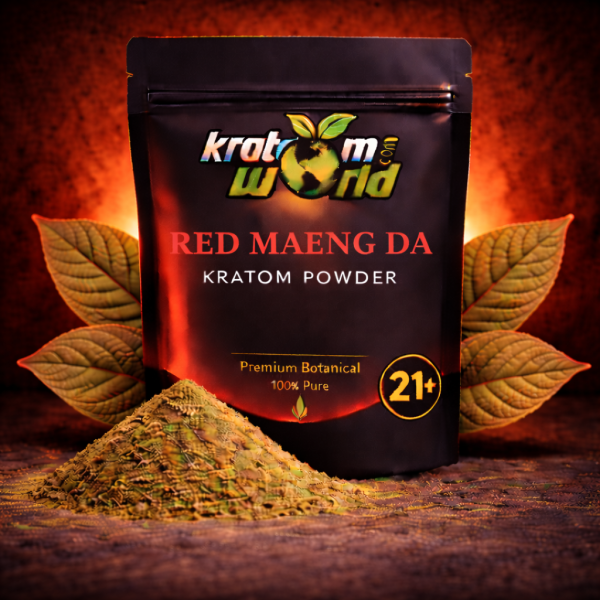
Red Maeng Da Kratom
From $14.95
Our most popular red-vein natural leaf, available as powder or capsules. GMP-sourced, single-strain, and clearly labeled.
Shop Now
Green Maeng Da Kratom
From $14.99
A green-vein natural leaf staple in powder or capsule form. Pure natural leaf with no synthetic alkaloids added.
Shop Now
Red Bali Kratom
From $14.95
Classic red-vein Bali natural leaf, milled fine and packed fresh. Powder and capsules, 21+ only.
Shop Now
5 Kilo Bulk Kratom Powder
From $249.95
Build your own 5-kilo bulk order from any natural-leaf strains we carry. Our best per-kilo value.
Shop NowFrequently Asked Questions
Is 7-OH banned right now?
No. As of July 15, 2026, 7-hydroxymitragynine is not federally scheduled. The DEA filed Notices of Intent on July 1 and the HHS comment window closes July 31, 2026. The earliest a temporary Schedule I order could take effect is August 5, 2026. Several states already restrict 7-OH under their own laws.
Does the federal 7-OH action affect natural kratom leaf?
Not as written. The DEA, HHS and FDA have all stated the action targets 7-OH above a specified threshold plus three synthetic derivatives, and is not intended to apply to natural kratom leaf containing only naturally occurring trace levels of 7-OH. Local and state governments, however, can and do regulate kratom more broadly.
Why did the American Kratom Association tell consumers not to comment?
The AKA said the HHS Request for Information asks specifically for scientific evidence on the 7-OH threshold, not personal testimonials, and warned that 7-OH manufacturers were urging consumers to submit form letters. The AKA said qualified researchers with responsive data should submit; consumers should not be recruited to defend a product category the AKA considers distinct from natural leaf.
What did Oklahoma actually announce?
On July 13, 2026, the Oklahoma Bureau of Narcotics and Oklahoma State Department of Health announced that retailers can be held liable for selling products containing kratom alkaloids above the limit set in Oklahoma’s Kratom Consumer Protection Act. OSDH enforces the KCPA. The state medical examiner reported more than 50 deaths attributed to kratom products since January 2025.
Is kratom still legal where I live?
It depends on your state, county and city, and it is changing month to month. Eight states currently prohibit kratom, more than thirty regulate it under Kratom Consumer Protection Act frameworks, and a growing number of counties and cities have passed their own local bans. Always verify current local law before ordering.